
Comparative Guide to Large TV Stands: How to Choose Between 200 and 240 cm
Why the size of your TV stand makes a difference
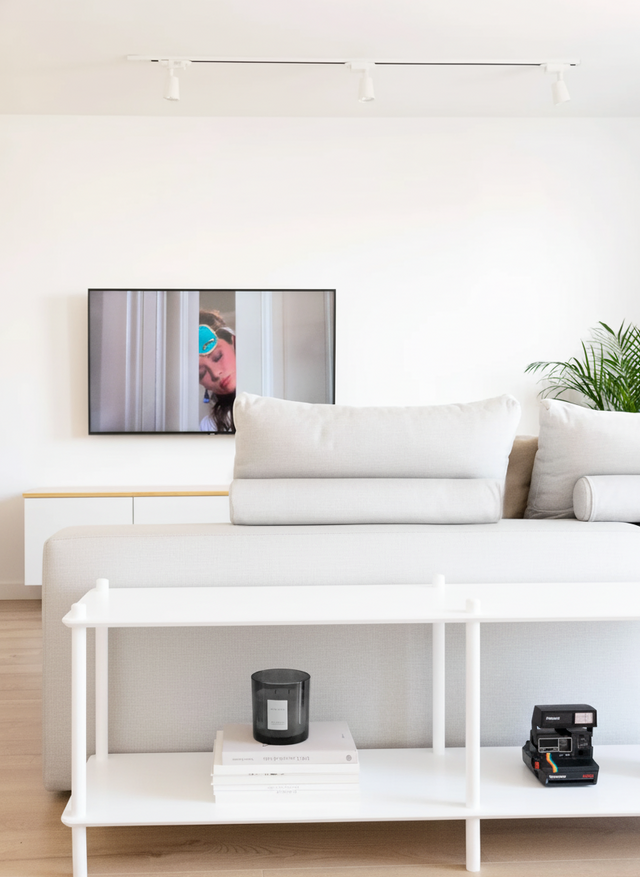
Imagine your living room: a generous sofa facing a wide wall where the television seems to float without context, without that visual balance that transforms a room into a coherent space. The TV stand is not just storage; it is the visual anchor of the living area.
To choose between a 200 cm TV stand and a 240 cm one, the golden rule is that the stand should exceed the width of the screen by at least 30-40 cm on each side. This means that for 65-inch (144 cm) televisions, you need a minimum of 200 cm, while 75-85-inch (166-189 cm) screens require 240 cm to achieve harmonious proportions. The furniture visually balances the weight of the television and defines the character of the living room.

When to choose a 200 cm TV stand
A 200 cm stand is the versatile size par excellence: it fits in living rooms of 15-25 m² and perfectly complements 55 to 65-inch televisions. It is the choice of 60% of Spanish households according to industry data, offering storage capacity without visually dominating the space.
This size works especially well in urban apartments where every centimeter counts. If your available wall measures between 250 and 300 cm, a 200 cm stand allows the whole to breathe, allowing you to add a floor lamp or a medium-sized plant on one of the sides. In the Slowdeco showroom in Valencia (Avda. Pérez Galdós 127) you can see how the Nolla collection solves this format with clean lines of Scandinavian inspiration: modules of natural oak with matte finishes that provide warmth without overwhelming.

When you need a 240 cm TV stand
240 cm is the size for large living rooms over 25 m² or walls at least 320 cm wide. This dimension accompanies 75-85 inch televisions and creates a powerful visual center, that feeling of a home cinema room that defines contemporary magazine interiors.
A piece of furniture of this format not only houses more components—consoles, soundbars, books, decorative objects—but also establishes a clear hierarchy in the space. It is the piece that anchors the living room. The Slowdeco Penxat collection offers modular compositions that reach and exceed 240 cm, combining suspended and supported modules that you can configure according to your wall. Its system allows it to grow horizontally or vertically, adapting to high ceilings or asymmetrical layouts.
Practical comparison: 200 cm vs 240 cm
Before deciding, consider these key factors that will determine which size works best in your space:
- Recommended TV size: 200 cm for 55-65" screens | 240 cm for 75-85"
- Minimum living room area: 15 m² for 200 cm | 25 m² for 240 cm
- Required wall width: 250-300 cm for 200 cm | 320-400 cm for 240 cm
- Storage capacity: 200 cm offers 3-4 modules | 240 cm allows 5-6 modules
- Visual weight: 200 cm is balanced and versatile | 240 cm is protagonist and decisive
- Indicative price range: 200 cm from €800 | 240 cm from €1,100 for quality furniture
An interior designer's trick: measure your current TV, add 60 cm (30 on each side) and you will have the recommended minimum. If your wall allows it, add 20-40 cm more for a more generous and professional result.
Materials that define quality and durability
A TV stand of these dimensions is a long-term investment, with a lifespan of 15-20 years if you choose the materials well. Slowdeco.es collections prioritize solid European oak wood and high-density boards with natural veneers, avoiding melamine finishes that deteriorate in 3-5 years.
Oak is the preferred wood for television furniture due to its dimensional stability: it barely deforms with temperature changes, a critical factor alongside electronic equipment that generates heat. The natural oil finishes, characteristic of the Penxat and Nolla collections, allow small scratches to be repaired without the need to sand the entire surface, something impossible with industrial lacquers.
In summary
- Choose 200 cm if your TV measures between 55-65 inches and your living room is 15-25 m²; it is the most versatile size for urban homes.
- Opt for 240 cm if you have 75-85 inch screens and walls more than 320 cm wide; this size creates a powerful visual center in large living rooms.
- The rule of proportion says that the furniture should exceed the width of the TV by 60-80 cm total for a balanced result.
- Slowdeco's Penxat and Nolla collections offer modular systems in natural oak that adapt to both sizes, with the possibility of expanding the composition in the future.
Frequently asked questions
Can I use a 200 cm TV stand with a 75-inch TV?
Technically yes, but the visual result will be unbalanced. A 75" TV measures 166 cm wide, leaving only 17 cm of furniture visible on each side. It is recommended that the furniture exceeds the TV by at least 30 cm on each side, which requires a minimum of 226 cm. For a 75", a 240 cm stand is the right choice.
Is a wall-mounted or floor-standing unit better?
Wall-mounted furniture visually expands the space by showing the floor and facilitates cleaning, ideal for living rooms less than 20 m². Floor-standing units offer more stability for heavy equipment and greater storage capacity. Modular collections like Penxat allow you to combine both systems in the same composition.
What depth do I need to hide cables and devices?
A depth of 40-45 cm is the standard for housing consoles, routers, and soundbars with space for ventilation. 35 cm furniture only works for minimalist configurations without additional equipment. Check that the furniture includes rear cable guides or ventilation holes, especially if you plan to install a video game console.
Alicia Martínez
Interior Designer and Founder of Slowdeco
0 Comments
There are no comments for this article. Be the first one to leave a message!