
High stools vs. low stools: Which is the best option?
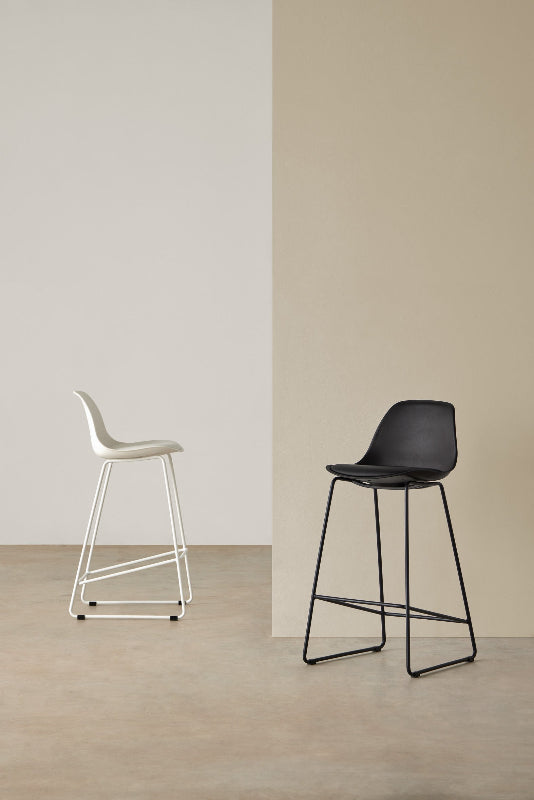
Have you ever wondered whether it's better to opt for high or low stools for your home? This decision goes far beyond a simple aesthetic choice. The right choice can completely transform the functionality and ambiance of your spaces, from the kitchen to the living room, and even your workspace.
As a specialist in handcrafted furniture, I can assure you that there's no one-size-fits-all solution. The key lies in understanding the characteristics of each option, evaluating your specific needs, and considering your lifestyle. In this article, I'll guide you through all the aspects you should consider to make the best decision.
At SlowDeco, where each piece is made using traditional methods in our workshops in Valencia, we want to share with you our years of experience creating furniture that is not only functional, but also tells a story of quality and Spanish craftsmanship.

Why the height of your stool makes a difference in your daily life
The height of a stool is not a minor detail. It determines how you interact with your space, influences your posture, and can even affect your productivity and well-being. A poorly chosen stool can become a constant source of discomfort, while the right one becomes your perfect companion for any activity.
When we talk about bar stools, we generally mean those that are between 65 and 75 centimeters tall. These are designed to complement kitchen counters, high islands, or elevated work surfaces. Their main function is to allow you to be at the correct height when using surfaces that are higher than conventional tables.
Low stools, meanwhile, range from 35 to 45 centimeters in height. They are ideal for coffee tables, as extra seating in the living room, or even as decorative elements that provide functionality without taking up too much visual space.
Ergonomics plays a crucial role in this choice. Your body needs to maintain specific angles to avoid strain and fatigue. A stool of the wrong height can cause back pain, neck strain, or knee discomfort after prolonged use.

High stools: main features and benefits
Bar stools have become undisputed stars of modern kitchens. Their popularity is no accident: they offer a unique combination of functionality and style that perfectly suits today's fast-paced lifestyle.
Functionality in modern kitchen spaces
In today's popular open-plan kitchens and living rooms, bar stools create a natural transition between the two spaces. They allow you to chat while cooking, supervise the children's homework, or simply enjoy a morning coffee with a view of the entire room.
The height of these stools makes them the perfect choice for quick breakfasts, casual meals, or even working from home when you need a change of scenery. Their versatility has made them essential in homes where practicality is valued without sacrificing style.

Vertical space optimization
One of the great advantages of bar stools is their ability to make the most of vertical space. In small kitchens or studios, every inch counts. These stools can be stored completely under the bar or island when not in use, freeing up circulation space and keeping the area uncluttered.
Furthermore, their visual presence is less heavy than that of traditional chairs. This creates a feeling of greater spaciousness and lightness in the room, something especially valuable in urban homes where square footage is a precious commodity.

Ergonomic aspects to consider
For a bar stool to be truly comfortable, it must be in proper proportion to the surface you'll be working or eating on. The general rule is that there should be between 25 and 30 centimeters between the stool seat and the bottom of the bar or table.
Footrests are crucial elements in bar stools. Without proper foot support, legs can experience reduced blood flow, leading to numbness or discomfort. At SlowDeco, all our bar stools include ergonomically positioned footrests.
While not always necessary, a backrest adds extra comfort for extended periods. A low backrest that supports the lumbar region can make the difference between a functional stool and a truly comfortable one.

Low stools: versatility and comfort in small spaces
Low stools represent the essence of versatility in furniture. Their compact size and multifunctional nature make them perfect allies for those looking to maximize the functionality of every corner of their home.
Flexible use in different rooms
Unlike other types of seating, low stools can easily be moved from room to room as needed. They can serve as extra seating in the living room when you have guests, as a side table next to the sofa for your cup of tea, or even as a raised stand for plants or decorative items.
In bedrooms, a low stool can serve as an impromptu dresser, a place to put clothes before bed, or a seat for putting on shoes. This versatility makes them smart investments for homes where every piece of furniture must justify its space with multiple functions.
Ease of storage and transport
Their compact size allows for storing several low stools in minimal spaces. They can be stacked in a closet, stored under beds or tables, or even hung on wall hooks when not in use. This ease of storage is especially valuable in small apartments or for those who frequently rearrange their living spaces.
The lightweight design of most low stools makes them easy to move. You can take them to the garden for an al fresco meal, move them to the balcony to create a reading nook, or easily relocate them when you need to clean or rearrange a room.
Ergonomic benefits for relaxed postures
Low stools encourage more natural and relaxed postures. Being closer to the ground, they reduce strain on the joints and allow the feet to rest completely on the floor, improving blood circulation.
For activities like meditation, casual reading, or simply relaxing while watching television, low stools offer a comfortable alternative to more structured chairs. Their height allows you to easily change position, cross your legs, or adopt more informal postures without compromising comfort.
Key factors in choosing the ideal height
The choice between high and low stools shouldn't be taken lightly. Several factors specific to your personal situation and the space you're using will determine which option is best for you.
Features of the available space
Analyzing your space should begin with the dimensions and height of existing surfaces. If you have a kitchen island that's 90 centimeters high, you'll need high stools. If your coffee table is 40 centimeters high, low stools will be the natural choice.
Ceiling height also influences this decision. In spaces with low ceilings, tall stools can create a feeling of confinement, while low ones help maintain a sense of vertical spaciousness.
Space distribution is another crucial factor. In galley or narrow kitchens, high stools can obstruct movement if they can't be stored completely under the bar. In these cases, low stools that can be stored elsewhere might be more practical.
Specific user needs
The age and physical condition of the primary users significantly influence this choice. Older people or those with mobility issues may find it more difficult to get on and off high stools, especially if they lack a backrest or armrests.
Children are also a factor to consider. High stools can be dangerous for young children, while low stools offer them greater independence and safety. However, if you want them to participate in cooking activities, a high stool with appropriate safety features may be the best option.
The main activities you'll be doing will also determine your choice. If you plan to work from the stool for extended periods, the height should allow for proper ergonomic posture. If you'll only be using it for quick meals or short breaks, long-term comfort may be less of a priority.
Lifestyle and frequency of use
Your daily routine also influences this decision. If you're someone who eats breakfast standing up and quickly, a high stool by the kitchen counter will make this easier. If you prefer more leisurely and relaxed meals, a low stool by a coffee table might be a better fit.
The frequency with which you entertain is also relevant. High stools in an open kitchen facilitate socializing while preparing meals. Low stools, due to their versatility, can be easily rearranged to create additional conversation spaces when guests arrive.

Materials and finishes: the importance of traditional craftsmanship
At SlowDeco, we firmly believe that the material and finishes of a stool are just as important as its design and functionality. Our artisanal tradition, cultivated in Valencian workshops for generations, is reflected in every detail of our pieces.
Solid wood: tradition and durability
Solid wood remains the preferred material for quality stools. In our workshops, we work primarily with local and sustainable woods, selected for their natural beauty and exceptional technical properties.
Oak, with its distinctive grain and unparalleled durability, is ideal for stools that will see heavy use. Its natural hardness protects it from bumps and scratches, while its ability to age gracefully makes it a long-term investment.
The lighter, fine-grained beech wood lends elegance and visual lightness. It is especially suitable for minimalist or Scandinavian spaces, where its natural color blends seamlessly with soft color palettes.
The handcrafted nature of these materials makes all the difference. Each piece is individually selected, treated with traditional techniques that respect the natural characteristics of the wood, and assembled using methods that guarantee decades of satisfying use.

Natural treatments and finishes
The finishes we use at SlowDeco respect both the health of our customers and the environment. We use natural oils and waxes that penetrate the wood, protecting it from within without creating a surface film that could crack or peel over time.
These natural treatments have the added advantage of allowing the wood to "breathe," adapting to changes in humidity and temperature without warping. Furthermore, they simplify maintenance: a simple periodic application of natural oil keeps the piece looking like new for years.
Traditional finishes also impart that unique patina that only comes with time and use. Each stool develops its own personality, acquiring nuances and textures that tell the story of its use and care.
Quality hardware and metal components
When our designs require metal elements, such as footrests or support structures, we select materials that perfectly complement the warmth of the wood. Steel with matte finishes or handcrafted wrought iron provide strength without compromising the natural aesthetic.
These elements are integrated into the piece during the manufacturing process, not added later. This integration guarantees the structural strength and visual harmony that characterize quality handcrafted furniture.
Decorative styles and their influence on choice
The decorative style of your home should significantly influence your choice between high and low stools. Each style has its own characteristic preferences, although creativity and personalization can always break the established rules.
Nordic and minimalist style
Nordic design favors clean lines, natural colors, and functionality without excessive ornamentation. In this context, both high and low stools can work perfectly, depending on their specific design.
Low stools fit naturally with the hygge philosophy, creating cozy, low-slung spaces that invite relaxation. A low stool in light wood next to a coffee table becomes the perfect complement for cozy evenings reading with blankets and candles.
High stools, when designed with the characteristic simplicity of Nordic style, offer functionality without disrupting visual harmony. Straight lines, natural materials, and neutral colors integrate them perfectly into open-plan Scandinavian-style kitchens.
Industrial environments and lofts
Industrial-style spaces, with their high ceilings, exposed structures, and materials like metal and concrete, often favor bar stools. These complement the verticality of the space and integrate perfectly with industrial-style kitchen bars and islands.
However, low stools also find their place in these settings when designed with appropriate materials. A low stool made of reclaimed wood with iron fittings can provide the perfect contrast in an industrial living room, softening the harshness of the predominant materials.

Mediterranean and traditional decor
In Mediterranean-style homes, where natural materials and warm colors predominate, handcrafted wooden stools find their perfect home. Whether tall or short, when made with traditional techniques and natural finishes, they blend harmoniously into these environments.
Low stools are especially suitable for patios and porches, where they create informal conversation nooks. High stools work perfectly in open-plan kitchens that maintain the connection with the outdoor spaces characteristic of the Mediterranean style.
Maintenance and care tips according to height
The maintenance of your stools will vary slightly depending on their height and use, but all quality handcrafted furniture requires specific care to maintain its beauty and functionality over time.
Specific care for high stools
High stools, due to their greater exposure and intensive use, require regular attention to certain specific areas. Footrests are high-wear zones that need periodic maintenance. A simple application of natural oil every few months will keep the wood nourished and protected.
Joints and assemblies also deserve special attention. Frequent use can cause slight loosening that should be checked and tightened periodically. This simple task can prevent bigger problems and significantly extend the stool's lifespan.
Cleaning should be done with products specifically designed for natural wood. Avoid harsh chemical cleaners that can damage the natural finish. A slightly damp cloth followed by a dry one is sufficient for daily cleaning.
Maintenance of low stools
Low stools, although they experience less structural wear, can suffer more impacts due to their proximity to the ground and their versatile use. Protect the legs with felt pads or protectors when using them on hard floors to prevent scratches on both the floor and the stool itself.
Their portability makes them more susceptible to wear and tear. Regularly inspect the edges and corners, applying natural oil to any areas that show signs of dryness or wear.
Recommended products and traditional techniques
At SlowDeco, we recommend specific natural oils for each type of wood. Linseed oil for light woods like beech, or oils with natural waxes for darker woods like walnut.
The application should be done on completely clean and dry wood. Apply the oil in the direction of the grain with a soft cloth, let it penetrate for a few minutes, and remove any excess. This process, performed two or three times a year, will keep your stools looking like new for decades.
The importance of origin: furniture made in Valencia
When you choose a stool made in Valencia, you're not just buying a piece of furniture; you're supporting a centuries-old tradition of Spanish craftsmanship and contributing to the local economy. At SlowDeco, we're proud to be part of this rich Valencian furniture-making tradition.
Valencian artisan tradition
Valencia has historically been a leading center for furniture production in Spain. Techniques passed down through generations have evolved without losing their artisanal essence. Our master cabinetmakers combine traditional knowledge with modern tools, maintaining quality standards that can only be achieved through experience and passion.
This tradition is reflected in every detail of our stools. From the selection of the wood to the final finishes, each step of the process is carried out with the care and attention that characterizes Valencian craftsmanship.
Local and sustainable raw materials
Working in Valencia allows us to access exceptional quality local raw materials. Our proximity to our wood suppliers guarantees exhaustive control over the quality and origin of every piece we use.
Furthermore, using local raw materials significantly reduces the carbon footprint of our products. A stool made in Valencia with local wood has a much smaller environmental impact than one manufactured on the other side of the world, regardless of its design quality.
Handcrafted quality control
Local manufacturing allows us to maintain quality control that would be impossible with outsourced production. Each stool undergoes multiple inspections during its manufacturing process, and only pieces that meet our strict standards reach the end customer.
This control also extends to after-sales service. Should any issues arise, our team can resolve them quickly, whether with minor adjustments or replacement parts specifically manufactured for your stool.
Current trends in stool design
Stool design has evolved considerably in recent years, adapting to new housing and aesthetic needs. However, the strongest trends are those that combine innovation with respect for traditional values of quality and durability.
Functional minimalism
The trend toward minimalism doesn't mean sacrificing functionality. The most successful designs are those that eliminate superfluous elements without compromising comfort or utility. A minimalist stool should be visually clean yet ergonomically perfect.
This philosophy translates into simple lines, natural colors, and finishes that highlight the intrinsic beauty of the materials. At SlowDeco, we interpret this trend by creating pieces where each element has a specific function, without unnecessary ornamentation but with the warmth that handcrafted wood provides.
Hybrid and multifunctional designs
Increasingly smaller living spaces have driven the development of multifunctional furniture. Stools are no exception: designs that function as seating, side tables, or even storage are gaining popularity.
This trend particularly benefits low stools, whose natural versatility is enhanced by clever designs. A low stool with an interior storage compartment can serve as a seat, footrest, and storage space, maximizing functionality in small areas.
Personalization and exclusivity
The pursuit of personalization has led many consumers to value unique furniture over mass-produced pieces. This trend clearly favors handcrafted manufacturing, where each piece can be tailored to the specific needs and tastes of the client.
In our Valencian workshops, we offer customization options ranging from the choice of wood to modifications in dimensions or finishes. This flexibility allows us to create unique stools that integrate perfectly into each specific home.
Budget and value for money
Investing in quality stools should be considered from a long-term perspective. While the initial price may be higher than that of mass-produced alternatives, the durability and aesthetic value of handcrafted pieces more than justify the difference.
Cost-per-use analysis
A quality handcrafted stool can last for decades with proper maintenance. If you divide the initial price by the expected years of use, the annual cost is very competitive compared to lower-quality stools that need replacing every few years.
Furthermore, handcrafted furniture tends to maintain or even increase in value over time, especially when well cared for. This appreciation makes purchasing it a smart investment for your home.
Factors that justify the initial investment
The quality of the materials, the precision of the craftsmanship, and the resulting durability are objective factors that justify the price of handcrafted stools. But there are also equally important subjective factors: the satisfaction of owning a unique piece, the pleasure of supporting local craftsmanship, and the pride of owning furniture that tells a story.
The difference is noticeable from the first use. The stability, comfort, and tactile feel of a handcrafted stool are incomparable to those of a mass-produced one. This difference is maintained and even improved over time, while mass-produced products tend to deteriorate.
Financing options and terms
At SlowDeco, we understand that investing in handcrafted furniture can require financial planning. That's why we offer installment payment options that make it easier to acquire quality pieces without straining your family budget.
We also considered the option of purchasing the stools in stages, starting with the most essential pieces and gradually completing the set. This strategy allows you to immediately enjoy the handcrafted quality while building a harmonious ensemble over time.
Case studies: real spaces and specific solutions
To help you better visualize the possibilities of each type of stool, let's analyze some practical cases based on real situations from our customers.
Small kitchen with central island
Maria and Carlos had a 12-square-meter kitchen with a central island that they wanted to use for both cooking and having a quick breakfast before work. They needed stools that wouldn't obstruct the flow of traffic but would be comfortable for everyday use.
The solution was 65-centimeter high stools with low backs, made of light beech wood to maintain a sense of spaciousness. Their design allows them to be stored completely under the island, freeing up circulation space. Ergonomic footrests ensure comfort even during long work sessions in the kitchen.
Multifunctional minimalist living room
Andrea lives in a 35-square-meter studio apartment where every piece of furniture must have multiple functions. She was looking for additional seating that wouldn't disrupt the visual harmony but could adapt to different situations: from dinners with friends to work sessions on the computer.
She opted for three low, minimalist stools that normally serve as side tables next to the sofa. When she has guests, they become extra seating. Their height makes them comfortable to use with the coffee table for casual meals or as a laptop stand.
Mediterranean terrace for the whole family
The Martínez family wanted to create an outdoor dining space on their 20-square-meter terrace. They needed flexibility to accommodate both intimate dinners and celebrations with guests, including children of different ages.
The solution combined high stools for the outdoor bar where adults enjoy appetizers, and low stools that children can easily move to create their own play areas. All made from treated outdoor wood, they maintain aesthetic unity while offering functionality tailored to each user.
Integration with other furniture elements
Stools don't exist in a vacuum: they are part of a furniture ensemble that must function harmoniously. Successful integration requires considering not only aesthetics, but also functionality and the proportions of the space.
Coordination with tables and work surfaces
The relationship between stools and work surfaces goes beyond simple height compatibility. Materials, finishes, and styles should create a coherent visual dialogue. A tall oak stool integrates perfectly with a kitchen island made of the same material, but it can also create an interesting contrast with surfaces of other materials such as marble or steel.
Visual proportion is also crucial. Overly bulky stools can visually overwhelm a delicate table, while very light stools can get lost next to imposing surfaces. Balance is achieved by considering not only the size but also the visual weight of each element.
Harmony with the overall style of the space
Stools can function as elements of continuity or as accents that break the monotony. In a very uniform space, a stool with a different color or texture can provide the necessary point of interest. In more eclectic spaces, neutral stools can serve as unifying elements.
Stylistic coherence doesn't mean absolute uniformity. Mixing high and low stools from the same designer or manufacturer can create dynamic compositions while maintaining visual unity. At SlowDeco, our collections are designed precisely to allow for these harmonious combinations.
Creation of functional sets
Stool arrangements should be planned with the flow of use of the space in mind. In an open kitchen, the combination of high stools at the island and low stools in the seating area can create different levels of social interaction, from standing conversations to more intimate gatherings.
Modularity is also valuable. Stools that can be easily rearranged allow you to adapt the space to different occasions. This flexibility is especially important in homes where the spatial configuration frequently changes depending on the activities.
Installation and technical considerations
The correct installation of the stools in their final location requires attention to several technical aspects that may seem minor but significantly influence the long-term user experience.
Spacing and circulation
A minimum distance of 60 centimeters should be maintained between high stools to allow for comfortable access and natural movement. If they are to be used during meals, this distance can be increased to 70-75 centimeters to allow for wider gestures.
The distance between the stool and the wall or other obstacles is also crucial. A minimum of 90 centimeters allows for comfortable standing and sitting, while 120 centimeters allows other people to pass behind without disturbing the stool user.
Soil protection and stability
Leg protectors are especially important for stools that will be moved frequently. Adhesive felt pads protect both the floor and the stool legs, reducing noise and preventing scratches. For very delicate floors, there are specific protectors that better distribute the weight.
Stability can be improved with minor adjustments to the legs. Adjustable feet compensate for small irregularities in the floor, preventing the stool from wobbling. This feature is especially valuable in older homes where floors may not be perfectly level.
Safety considerations
High stools require special attention to safety, especially in homes with children or elderly people. Rounded edges, the absence of sharp corners, and structural stability are non-negotiable aspects of quality design.
For users with mobility issues, consider stools with backrests and armrests, or at least discreet handles to facilitate support when getting on and off. These features can be integrated into the design without compromising the aesthetics.
Sustainability and environmental commitment
At SlowDeco, sustainability isn't just a trend; it's a philosophy that guides every decision we make. From the selection of raw materials to the manufacturing processes, every step is designed to minimize environmental impact while maximizing the durability and quality of the final product.
Responsibly sourced wood
All our stools are made exclusively from wood sourced from sustainably managed forests. We work with local suppliers who share our philosophy of respect for the environment, prioritizing fast-growing species or wood from controlled logging and reforestation.
This policy not only protects forest ecosystems but also guarantees the complete traceability of our products. Each stool comes with information about the origin of its wood, allowing the customer to learn the full story of their piece of furniture.
The proximity of our suppliers significantly reduces CO2 emissions associated with transporting raw materials. A piece manufactured in Valencia using Valencian wood has a minimal carbon footprint compared to imported alternatives.
Eco-responsible manufacturing processes
Our workshops run on renewable energy whenever possible, and processes are optimized to minimize material waste. Wood chips and sawdust are reused for heating or donated to companies that use them for other purposes, closing the waste loop.
The finishes we use are all natural and biodegradable. The oils and waxes we use contain no volatile organic compounds (VOCs) that are harmful to health or the environment. This choice protects both our artisans and the end users of the furniture.
Durability as an ecological principle
The concept of "slow furniture" that we advocate is based on creating furniture that lasts for decades, not years. This durability is the best contribution we can make to sustainability: a stool that lasts 30 years prevents the production of multiple replacements during that period.
Furthermore, we design with repairability in mind. If a stool is damaged, it can always be repaired instead of discarded. Our technical service can restore pieces even decades after their manufacture, using the same original techniques and materials.
Customization and design options
One of the great advantages of choosing handcrafted furniture is the possibility of personalization. At SlowDeco, each stool can be adapted to the specific needs and personal tastes of each client, creating unique pieces that fit perfectly in their home.
Adaptation of dimensions
Do you need a 68-centimeter high stool instead of the standard 65? Or would you prefer a slightly taller low stool to fit your specific coffee table? Our craftspeople can adjust the dimensions of any design to perfectly suit your space and needs.
This flexibility is especially valuable in non-standard spaces. Kitchens with unusually high countertops, inherited tables with specific proportions, or users with particular ergonomic needs can greatly benefit from this customization capability.
The modifications aren't limited to height. We can adjust the seat depth, overall width, or even the shape to fit spaces with specific limitations, such as columns or radiators.
Selection of woods and finishes
We offer a wide range of local woods, each with its own unique characteristics of color, grain, and texture. Oak brings strength and character, beech offers softness and brightness, walnut adds elegance and sophistication, and cherry ages with a unique patina that improves with time.
The finishes can also be fully customized. From natural oils that maintain the original color of the wood to eco-friendly dyes that allow you to achieve specific shades, the possibilities are virtually limitless.
For clients seeking something truly unique, we also work with special woods sourced from singular trees or those with particular histories. These materials result in exceptional pieces with unrepeatable characteristics.
Details and distinctive elements
The small details make all the difference between a standard piece of furniture and a unique one. We can incorporate custom engravings, specific shapes in the backrests, or even metal elements with patterns designed especially for each client.
Footrests can take on different shapes and materials depending on aesthetic and functional preferences. From simple wooden bars to more complex metal elements, each option lends a different character to the final stool.
Where to buy: quality high stools vs. handcrafted low stools
Choosing where to buy your stools is just as important as deciding between high and low ones. At SlowDeco, we pride ourselves on offering not only exceptional products, but also a service that supports our customers from their initial inquiry to years after their purchase.
Showroom and workshop in Valencia
Our showroom in Valencia allows customers to physically experience the quality of our stools before making a decision. Touching the wood, testing the comfort, observing the finishes, and understanding the differences between the various options is essential for making the right choice.
Our workshop is located in the same space, where customers can meet the artisans who will craft their furniture and understand the creative process. This transparency is part of our commitment to quality and authenticity.
Personalized consulting service
Each client receives personalized advice from our furniture specialists. We analyze the specific characteristics of the space, the usage needs, and aesthetic preferences to recommend the most suitable solution.
This service includes the option of home visits for complex cases where the specific characteristics of the space require detailed analysis. Our specialists can take measurements, assess the lighting, and propose integrated solutions that optimize both functionality and aesthetics.
Guarantees and after-sales service
All our Solid wood stools include a full warranty against manufacturing defects, plus a maintenance service that can extend throughout the product's lifespan.
Our technical team can perform regular checkups, apply new finishes when necessary, or carry out minor repairs that will keep the stool in optimal condition for decades.
The future of stool design
The evolution of stool design reflects broader changes in how we live and work. Current trends point toward greater integration of functionality, sustainability, and personalization.
Technology at the service of craftsmanship
Digital tools are revolutionizing the way handcrafted furniture is designed and manufactured. Computer-aided design allows for the visualization of customized modifications before production, reducing errors and optimizing material use.
However, technology complements, not replaces, craftsmanship. CNC machines can make precise cuts, but assembly, finishing, and quality control still depend on human experience and skill.
New sustainable materials
Research into sustainable materials is opening up new possibilities for stool design. Woods from fast-growing species, composite materials made from natural fibers, or even reclaimed wood from old structures offer interesting alternatives.
At SlowDeco we maintain an open mind towards these new materials, but always evaluating them under our strict criteria of durability, beauty and sustainability.
Adaptive and modular design
The future points towards furniture that can evolve with users' changing needs. Stools with interchangeable parts, adjustable heights, or transforming capabilities can offer greater versatility without compromising aesthetics or quality.
Stories of satisfied customers
The best recommendations come from our customers' real-life experiences. These stories illustrate how the right choice between high and low stools can transform the experience of living in a space.
The kitchen that changed the family dynamic
The Garcías had a traditional, closed-off kitchen that they barely used for anything other than heating food. The renovation included opening it up to the living room and adding a central island with High stools with backrest , specially manufactured to fit the specific height of your island.
The change was immediate. Breakfasts became moments for family conversation, children could do their homework while dinner was being prepared, and gatherings with friends naturally centered around the island. High stools transformed a functional space into the social heart of the home.
The convertible studio that maximizes every square meter
Carmen, a freelance architect, needed her 25-square-meter studio to function as an office during the day and an entertainment space at night. The solution included Stackable low stools that are stored in a closet during the day and distributed around the space at night according to needs.
The versatility of these stools allows for completely different configurations in a matter of minutes. For collaborative work sessions, they can be grouped around the central table; for parties, they can be distributed throughout the space; and for moments of relaxation, they can be placed by the window, creating a reading nook.
The terrace that transforms into an outdoor dining area
The Molina family wanted to make the most of their 15-square-meter terrace year-round. Their solution combined a high bar for snacks with tall outdoor stools , and a low area with stools that function as seats or side tables depending on the occasion.
The materials, all specially treated for outdoor use, have withstood two years of heavy use while maintaining their original appearance. The flexible configuration allows for everything from intimate dinners to celebrations with up to twelve people.
Final comparison: advantages and disadvantages
To help you make your final decision, we've summarized the main advantages and disadvantages of each option:
High stools
Advantages:
-
Perfect for modern kitchens with islands or bars
-
They optimize the use of vertical space
-
They facilitate socialization during meal preparation
-
They are stored completely under the work surfaces
-
Ideal for quick meals and breakfasts
Disadvantages:
-
They may be uncomfortable for elderly people or people with mobility problems
-
They require surfaces of the appropriate height
-
Less versatile in terms of usage locations
-
They can create a feeling of confinement in spaces with low ceilings.
Low stools
Advantages:
-
Maximum versatility for use in different spaces
-
Suitable for all ages and physical conditions
-
Easy to store and transport
-
They function as side tables when not in use as seats
-
They encourage more relaxed and natural postures
Disadvantages:
-
They are not suitable for high surfaces
-
They can take up more visual space in small rooms.
-
Less efficient at optimizing vertical space
Final conclusions and recommendations
There's no single right answer when choosing between high and low bar stools. It depends entirely on your specific needs, the characteristics of your space, and your lifestyle. However, there are some general principles that can guide your decision:
If your priority is optimizing a modern kitchen with an island or bar, bar stools are the natural choice. Their ability to store completely under the work surface and facilitate socializing makes them almost indispensable in this type of space.
If you value versatility above all else and need furniture that can adapt to different uses and locations, low stools offer unparalleled flexibility. Their ability to function as seating, side tables, or decorative elements makes them very smart investments for small or ever-changing spaces.
The quality of craftsmanship is paramount, regardless of the height you choose. A quality handcrafted stool, made with sustainable materials and traditional techniques, will be an investment you'll enjoy for decades. The difference in comfort, durability, and aesthetic satisfaction more than justifies the initial investment.
Our specific recommendations by household type
For modern open-plan kitchens: High oak bar stools with a low backrest and ergonomic footrest. The standard height of 65-70 cm fits perfectly on most kitchen islands and counters.
For small and versatile spaces: Low stackable stools made of light beech that do not visually overwhelm the space but provide the necessary functionality.
For terraces and outdoor spaces: Combination of high and low stools with Special treatment for exterior , allowing the creation of different environments in the same space.
For homes with children: Low stools with rounded edges and maximum stability, allowing autonomy and safety for the little ones.
For users with specific needs: Customized designs that adapt exactly to the required dimensions, heights and ergonomic features.
Conclusion
Choosing between high and low stools is much more than an aesthetic decision: it's about defining how you're going to live in and enjoy your spaces. Each option offers specific benefits that can completely transform the functionality and ambiance of your home.
The most important thing is that your choice truly reflects your lifestyle, the characteristics of your space, and your long-term needs. A well-chosen stool becomes a silent companion through countless everyday moments: from your morning coffee to late-night chats with friends.
At SlowDeco, we are committed to guiding you through this decision, offering not only exceptional quality products but also the guidance you need to make the perfect choice. Our stools, handcrafted in Valencia using sustainable materials and traditional techniques, are designed to be a part of your life for decades to come.
Investing in handcrafted furniture is an investment in quality of life, sustainability, and supporting Spanish artisanal traditions. Every time you use your stool, you'll remember that you've chosen quality, authenticity, and respect for the environment.
Are you ready to make a decision? We look forward to seeing you at our showroom in Valencia, or you can contact us with any questions. Your perfect stool is waiting for you.
0 Comments
There are no comments for this article. Be the first one to leave a message!