
Modern TV furniture designs for contemporary spaces
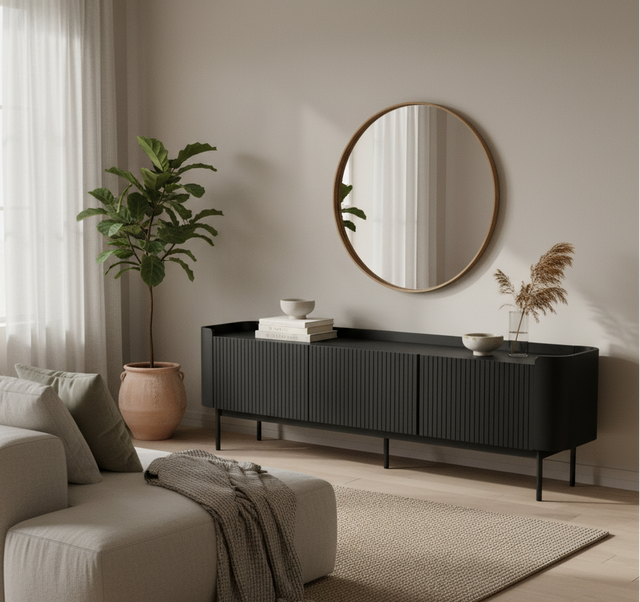
In the world of contemporary interior design, the TV unit has become much more than just a stand for your television. It's the central element that defines the character of your living room and reflects your personal style. As a furniture specialist with over a decade of experience, I've watched this essential piece evolve from simple shelves to true functional works of art that transform spaces.
I invite you to discover how modern TV furniture designs can revolutionize your home, especially those that uphold Spanish artisanal traditions and embrace sustainability as a way of life. In Valencia, the cradle of master cabinetmakers, traditional wisdom merges with the demands of contemporary design, creating unique pieces that transcend fleeting trends.
The evolution of TV furniture in contemporary spaces
More than just a support: the soul of the modern living room
Your TV unit is no longer just a place to put your television. In contemporary design, it has become the visual focal point of your living room, an element that articulates the entire space and defines the personality of your home. This evolution reflects how we live today: more fluid spaces, integrated technology, and a constant search for harmony between functionality and aesthetics.
Modern designs embrace this reality, offering solutions that go far beyond basic storage. We're talking about pieces that intelligently manage cables, provide dedicated spaces for each device, and adapt to the technological evolution of your home. The custom Penxat TV unit perfectly exemplifies this philosophy: modularity, personalization and integrated functionality.

The importance of minimalist design in contemporary spaces
Minimalism doesn't mean emptiness or coldness; it means intention. Every line, every material, every proportion has a clear purpose. In contemporary TV furniture, this philosophy translates into clean designs that don't compete with other elements in the space, but rather complement and enhance them.
Natural wood, especially the oak and ash used in our Valencian carpentry workshops, provides the necessary warmth to counteract the coldness of technology. The 240cm TV unit from the Penxat modular system demonstrates how simple lines can create an extraordinary visual impact without being overwhelming.
Distinctive features of modern TV furniture
Modularity: adapt your furniture to your life
Modularity represents a revolution in the world of furniture. It's not just about being able to add or remove elements; it's a philosophy that recognizes that your life changes and your furniture should evolve with you. Modular systems allow you to start with a basic configuration and expand it according to your future needs.
This feature is especially valuable in contemporary homes where flexibility is key. If you move, if your family grows, or simply if your tastes evolve, modular furniture adapts. The Penxat 160cm TV unit can be easily transformed by adding modules, changing configurations or even modifying the support system.

Intelligent space management
Contemporary designs understand that every inch counts. That's why they integrate smart storage solutions that maintain a clean aesthetic while providing all the necessary functionality. Hidden drawers, dedicated compartments for different devices, and cable management systems keep everything tidy and accessible.
This spatial intelligence also extends to the relationship of the furniture to the rest of the space. Floating TV units create a sense of visual spaciousness by freeing up floor space, while designs with metal legs add lightness and modernity without sacrificing stability.
Discrete technological integration
Technology should serve, not dominate. Modern TV furniture incorporates technological solutions in an elegant and discreet way. Integrated cable management, dedicated spaces for routers and devices, and even preparation for LED lighting systems enhance the viewing experience.
This integration is achieved during the design process, not as an afterthought. When we work with specialized joinery workshops, every technological element is considered from the very first sketch, ensuring that modern functionality blends seamlessly with timeless aesthetics.
Spanish artisanal tradition in contemporary design
Valencia: cradle of master cabinetmakers
Valencia is not just a beautiful city; it's a historic center of artisanal excellence. For centuries, its carpentry workshops have perfected techniques that today merge with contemporary design to create exceptional pieces. Every piece of furniture that leaves a Valencian workshop carries with it generations of knowledge and passion for the craft.
This tradition is evident in every detail: the treatment of the wood that respects the natural grain, the traditional joints that guarantee centuries of durability, and the hand-finishing that provides that unique texture impossible to replicate industrially. When you touch a piece of Valencian handcrafted furniture, you immediately feel the difference.

The value of handmade goods in the digital age
In an increasingly digital world, handmade items acquire a special value. It's not nostalgia; it's recognizing that certain qualities can only be achieved through human intervention. The careful selection of each piece of wood, the perfect fit of each joint, the attention to details that a machine would never consider.
This artisanal philosophy is not at odds with modernity. On the contrary, it enriches it. The Nube 180cm TV unit exemplifies this fusion: completely contemporary lines executed with traditional techniques that guarantee exceptional quality and durability.
Traditional techniques applied to modern design
Valencian carpentry workshops have adapted their centuries-old techniques to the demands of contemporary design. Dovetail joints, traditional in classic cabinetmaking, are reinterpreted to create modular structures. Natural finishes based on oils and waxes are perfected to withstand the intensive use of modern life.
This adaptation requires mastery and a deep understanding of both traditional techniques and contemporary needs. It's not simply about applying old methods; it's about evolving those methods while maintaining their essence and improving their functionality.
Sustainability and environmental responsibility
Local production: reducing the carbon footprint
Local production isn't just a trend; it's a responsibility. When your furniture is manufactured just a few kilometers from your home, you dramatically reduce the environmental impact of transportation. But the benefits go far beyond emissions reduction.
Local production allows for direct quality control, fluid communication between artisan and customer, and the possibility of personalization that mass production simply cannot offer. Furthermore, it strengthens the local economy and preserves artisanal traditions that might otherwise be lost.
Sustainable materials and responsible processes
Sustainability begins with the selection of materials. The wood used in Valencian furniture comes from responsibly managed forests, where several trees are planted for every one felled. This regenerative cycle ensures that your furniture contributes positively to the environmental balance.
The manufacturing processes also embrace sustainability. Natural finishes free of toxic chemicals, maximum use of each piece of wood to minimize waste, and construction techniques that allow for repairs and upgrades instead of complete replacements.

Philosophy of conscious consumption
Conscious consumption doesn't mean consuming less; it means consuming better. Investing in quality furniture that will last for decades is infinitely more sustainable than replacing cheap furniture every few years. This philosophy is reflected in every aspect of the design: durability, timeless aesthetics, and ease of maintenance.
The Designer 150cm TV units are designed to evolve with you. If you need modifications, repairs, or upgrades, the original manufacturer can provide them, extending the unit's lifespan and reducing its environmental impact.
Types of modern designs for different spaces
Floating furniture: visual lightness and functionality
Floating TV units represent the quintessential contemporary design. By visually freeing up floor space, they create a sense of spaciousness that is especially valuable in small rooms. But their value goes far beyond aesthetics.
Wall mounting allows for precise positioning to suit your specific needs: perfect height for comfortable viewing, integration with other wall elements, and easy floor cleaning. Modern mounting systems support considerable weight while maintaining the stability necessary for daily use.
Modular designs: maximum flexibility
Modularity is modern design's answer to contemporary living. It allows you to start with a basic configuration and expand it as your needs evolve. This flexibility is especially valuable in homes where space is at a premium and every element must maximize its utility.
Modular systems also facilitate moving, reconfiguring spaces, and adapting to new technologies. If a new device appears that needs specific space, you can add the corresponding module without changing the entire unit.
Minimalist styles: elegance in simplicity
Contemporary minimalism is not empty; it is distilled essence. Every line has a purpose, every proportion is calculated to create visual harmony. In TV furniture, this translates into designs that provide maximum functionality with minimal visual presence.
This philosophy is especially effective in living rooms where you want the TV unit to complement, not compete with, other decorative elements. White TV furniture exemplifies this approach: subtle presence but significant visual impact.

Designs with mixed materials
The clever combination of materials creates unique pieces that reflect the complexity of contemporary life. Natural wood for warmth, metal for structure and modernity, and occasionally glass for visual lightness. This mix should be harmonious, not cacophonous.
Furniture with metal legs and natural wood bodies perfectly embodies this philosophy. The contrast between materials creates visual interest while maintaining aesthetic coherence. It's a sophisticated approach that requires a deep understanding of how different materials interact visually and functionally.
Current trends in TV furniture design
Predominant colors and finishes
Natural colors dominate the contemporary landscape. Woods in their natural tones: golden oaks, bleached ash, deep walnuts. These tones are complemented by metals in matte finishes: textured black, dark bronze, brushed steel. The combination creates sophisticated palettes that work in diverse contexts.
Natural finishes have evolved significantly. Modern oils and waxes provide exceptional protection while maintaining the wood's natural texture and breathability. This is especially important for TV stands, which can experience temperature fluctuations due to the proximity of electronic devices.

Integrated and invisible technology
The most successful technological integration is the one that goes unseen. Hidden cable management, dedicated compartments for different devices, and even preparation for future technologies that don't yet exist. This kind of foresight requires experience and a deep understanding of technological trends.
Cable management systems have evolved from simple holes to integrated channels that allow for flexible organization and easy access for maintenance. This evolution reflects how furniture design is constantly adapting to our changing needs.
Personalization and adaptability
Personalization is no longer a luxury; it's become an expectation. Every home is unique, every family has specific needs, and furniture should reflect that individuality. Modular systems allow for unique configurations that perfectly adapt to your space and lifestyle.
This personalization extends to every aspect: exact dimensions for your space, specific configuration for your devices, and finishes that complement your existing décor. It's a handcrafted approach applied to contemporary needs.
Choosing the perfect TV stand for your space
Analysis of available space
Before falling in love with a specific design, you should objectively analyze your space. Consider not only the physical dimensions, but also the flow of movement, natural light, its relationship to other furniture, and the overall functionality of the room.
A TV unit perfectly suited to a large space can overwhelm a small living room, while a delicate design can get lost in a spacious room. Proportion is key to creating visual and functional harmony.
Fundamental technical considerations
The optimal viewing distance determines both the furniture position and the mounting height of the television. This must be coordinated with the seating height, ambient lighting, and window position to avoid annoying reflections.
Technical considerations also include adequate ventilation for electronic devices, accessibility for connections and maintenance, and load capacity for all the items you plan to place in the cabinet.
Harmony with the rest of the decor
Your TV unit doesn't exist in a vacuum; it must harmonize with all the elements in the space. This includes colors, textures, proportions, and styles. An exceptional piece of furniture that doesn't blend with its surroundings will create constant visual tension.
The key is finding the balance between personality and integration. Your furniture can be a focal point without being jarring; it can stand out while maintaining the overall harmony of the space.

Care and maintenance of modern TV furniture
Maintenance of natural woods
Natural wood requires specific care to maintain its beauty and functionality over time. The natural oils used in contemporary finishes need periodic renewal, generally every 12-18 months depending on use and environmental conditions.
Maintenance isn't complicated, but it does need to be consistent. Regular cleaning with wood-specific products, protection from extreme changes in humidity and temperature, and prompt attention to any minor damage to prevent it from becoming a bigger problem are essential.
Protection against daily wear and tear
TV units experience intensive use: frequent drawer opening, placement of objects, and proximity to heat-generating devices. The design must anticipate this use and provide adequate protection without compromising aesthetics.
Quality hardware, durable finishes, and robust construction are investments that translate into years of perfect operation. It's better to invest in quality upfront than to face frequent repairs or premature replacement.
Future updates and modifications
A well-designed piece of furniture should be able to evolve with you. This means modular construction that allows you to add elements, modify configurations, or update specific components without affecting the main structure.
This future flexibility is especially important in TV furniture, where technology is constantly evolving. A piece of furniture that can adapt to new devices, different cables, or changes in your entertainment habits remains relevant over time.
Economic impact of choosing local
Added value of Spanish production
Choosing local production is not just an ethical decision; it's a smart investment. Furniture made in Spain, especially in centers of artisanal tradition like Valencia, offers exceptional value for money when you consider durability, after-sales service, and resale value.
Local production also eliminates unnecessary intermediaries, allowing more of your investment to go directly to quality materials and skilled labor. It's a more efficient and transparent economic model.

Support for the local economy
Your purchasing decision has a direct impact on your region's economy. Every locally made piece of furniture generates employment for artisans, material suppliers, transporters, and related services. It's a multiplier effect that strengthens the entire community.
This support also preserves artisanal traditions that might otherwise disappear. You keep centuries-old knowledge alive by adapting it to contemporary needs, creating a bridge between the past and the future.
Real vs. apparent costs
The true cost of a piece of furniture includes much more than the initial price. Durability, ease of maintenance, availability of spare parts, after-sales service, and resale value are all factors that determine the total cost of ownership.
Handcrafted furniture may have a higher initial price than mass-produced alternatives, but its cost per year of use is usually significantly lower. It's a long-term investment that appreciates over time, both financially and sentimentally.
Success stories: real transformations
Maximizing small spaces
Small spaces require smart solutions that maximize functionality without creating a feeling of confinement. A 20-square-meter living room can feel spacious with the right TV unit, or claustrophobic with the wrong choice.
Floating furniture is especially effective in these cases. By visually freeing up floor space, it creates a feeling of spaciousness. Modular systems allow for specific configurations that make the most of every available inch without feeling overwhelming.
Multifunctional family rooms
Modern families need spaces that function for multiple activities: entertainment, work, play, and relaxation. The TV unit should facilitate these transitions, providing organized storage and useful surfaces for different purposes.
Modular systems are especially valuable here. They allow for configurations that adapt to different times of day or specific activities. One module can serve as toys during the day and entertainment devices at night.
Integrations with existing architecture
Many homes have specific architectural features that must be considered: columns, uneven floors, niches, unusual windows. A custom TV unit can turn these challenging features into opportunities, seamlessly integrating with the existing architecture.
This integration requires precise measurement, an understanding of the space, and custom manufacturing capabilities. This is where the difference between artisanal and industrial production becomes most apparent.
Future of TV furniture design
Anticipated technological evolution
The future of TV furniture design must anticipate technological changes that are not yet fully defined. Thinner televisions, more compact streaming devices, distributed audio systems, smart lighting: all these elements will influence furniture design.
The key lies in creating flexible designs that can adapt to future technologies without requiring complete replacement. Modular systems, flexible cable management, and adaptable spaces are features that ensure future relevance.
Sustainability as a determining factor
Environmental awareness is not a passing trend; it's a permanent transformation in how we understand consumption. The furniture of the future must be inherently sustainable: renewable materials, responsible manufacturing processes, exceptional durability, and the possibility of recycling at the end of its useful life.
This sustainability must be comprehensive, not superficial. From the selection of the wood to the final packaging, every aspect must consider the environmental impact. It is a holistic approach that defines contemporary excellence.
Mass customization
Technology allows for customization on a scale previously impossible. Computer-aided design systems, flexible manufacturing, and efficient logistics make it possible for each piece of furniture to be unique without compromising efficiency or cost.
This mass customization combines the best of both worlds: the efficiency of industrial processes with the individuality of handcrafted manufacturing. It's the future of furniture: personal, efficient, and accessible.

To conclude
Your decision to choose a modern TV stand handcrafted in Valencia goes beyond simply buying furniture. You are investing in lasting quality, supporting centuries-old traditions that adapt to the present, and contributing to a more responsible and sustainable consumption model.
The contemporary designs we've explored demonstrate how modernity can honor tradition without sacrificing innovation. Each piece, crafted in Valencian workshops, embodies generations of knowledge applied to the needs of your modern life.
Modularity, sustainability, and personalization are not just technical features; they are manifestations of a philosophy that recognizes your home should evolve with you. A well-chosen TV unit becomes a companion for decades, adapting to changes in your family, tastes, and lifestyle.
By choosing local production, you not only acquire exceptional furniture; you participate in the preservation of artisanal traditions, support your region's economy, and significantly reduce the environmental impact of your purchase. It's a decision that yields numerous tangible and intangible benefits.
Your living room deserves a TV unit that reflects your personality, meets your current needs, and adapts to your future. Modern designs, handcrafted in Valencia, offer this unique combination of tradition, innovation, and sustainability that defines contemporary excellence. It's time to transform your space with a piece that transcends trends and stands the test of time.
0 Comments
There are no comments for this article. Be the first one to leave a message!