
Natural wood chairs: how to choose them for every space
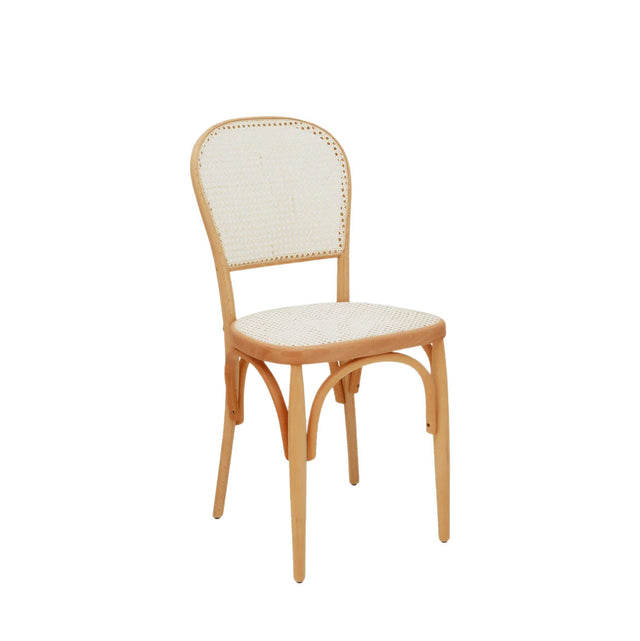
Why Natural Wood Chairs Are the Most Durable Choice

There's a moment you instantly recognize: you walk into a home and your eyes land on those chairs around the dining table. You can't explain why, but they exude warmth, solidity—something plastic or metal chairs just don't achieve.
Natural wood chairs combine exceptional durability with a timeless aesthetic that improves with age. A solid oak or beech chair can last over 50 years of daily use, while their chipboard equivalents rarely last beyond 8-10 years. The key is to choose the right wood for the intended use: oak for high-traffic dining areas, beech for workspaces, and ash when you seek lightness without sacrificing strength.
Which wood to choose for each area of your home
You might be interested in

Canada 160 Light Brown Mango Sideboard
View product →Oak can withstand up to 300 kg of static weight and resists ambient humidity of 40-65% without warping, making it ideal for dining rooms and kitchens. Beech, which is 15% lighter, works better for desks and high-traffic areas where you'll move the chair multiple times a day.
In the dining room, where chairs endure long dinners, movement when sitting and standing, and occasional liquid spills, solid oak is unbeatable. Its tight grain repels stains, and its density—between 600 and 700 kg/m³—guarantees stability for decades. Slowdeco's Nordic collections primarily use European oak from FSC-certified forests, ensuring traceability and sustainability.
For the bedroom or a reading nook, where the chair functions more as a decorative element than for intensive use, you can opt for lighter woods like ash or birch. They are 20% more economical and provide the characteristic luminosity of Scandinavian style.
The kitchen: a special case
If you're looking for chairs for a kitchen island or an auxiliary table, consider natural oil finishes instead of varnish. Oil penetrates the fiber and allows the wood to breathe, preventing kitchen humidity—which can reach peaks of 70%—from causing cracks or warping. Maintenance is simple: a coat of Danish oil every 12-18 months.
How to recognize quality solid wood

Authentic solid wood shows continuous grain on the edges and joints, never repetitive patterns. The weight of a solid oak dining chair ranges from 4.5 to 6 kg; if it weighs less than 3 kg, it likely has a particle board seat.
At Slowdeco's showroom in Valencia, you can touch and compare different woods before deciding. This tactile experience reveals nuances that no photo conveys: the satin texture of oiled oak versus the softer feel of varnished beech, or the subtle aroma of new wood that is absent in synthetic materials.
Also, pay attention to the joints. Quality chairs use mortise and tenon or dovetail joints, techniques that have been working for centuries. Avoid chairs where you see visible screws at stress points: they are the first point of failure.
Practical comparison: woods for Nordic chairs
- Oak: 1,360 Janka hardness, maximum durability, ideal for dining and kitchen. Medium-high price. Ages with golden tones.
- Beech: 1,300 Janka hardness, excellent value for money, perfect for desks and workspaces. Light pink tone.
- Ash: 1,320 Janka hardness, the lightest of the three, optimal for chairs that are moved frequently. Very expressive grain.
- Birch: 1,260 Janka hardness, economical and bright, recommended for bedrooms and low-traffic areas.
In summary
- A well-built solid wood chair lasts over 50 years of use compared to 8-10 years for chipboard options.
- Oak is the best choice for dining rooms and kitchens due to its density (600-700 kg/m³) and resistance to humidity.
- Mortise and tenon joints indicate artisanal quality; avoid chairs with visible screws at stress points.
- At the Slowdeco showroom in Valencia (Avda. Pérez Galdós 127), you can compare woods and finishes before deciding, or explore the full catalog at slowdeco.es.
Frequently asked questions
How much weight can a solid wood chair support?
A solid oak or beech chair with traditional joints supports between 250 and 300 kg of static weight. For normal household use, this safety margin guarantees decades of trouble-free service. Chairs with cane or upholstered seats slightly reduce this figure but still far exceed any chipboard alternative.
What maintenance do natural wood chairs require?
Maintenance depends on the finish. Chairs with natural oil finishes need an application every 12-18 months using Danish or linseed oil. Varnished chairs only require cleaning with a damp cloth. In both cases, avoid silicone products and maintain ambient humidity between 40-65% to prevent cracks.
Is it worth paying more for solid wood?
The initial cost of a solid wood chair can be 40-60% higher than an equivalent chipboard option, but its lifespan is 5-6 times longer. Additionally, solid wood can be restored and sanded multiple times, while chipboard cannot be repaired once the surface is damaged.
Alicia Martínez
Interior Designer and Founder of Slowdeco
0 Comments
There are no comments for this article. Be the first one to leave a message!