
Modular removable cover sofas
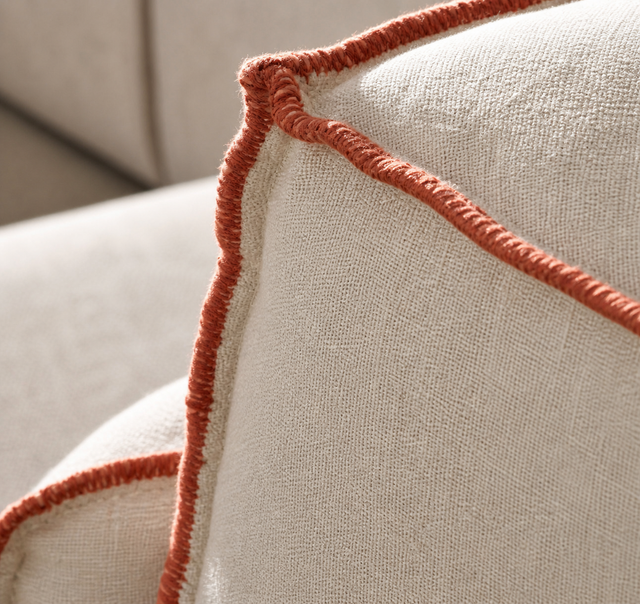
What are modular sofas and why are they a decorating sensation?
Imagine coming home after a long day, sinking into your sofa, and having it adapt exactly to what you need: today a chaise lounge for watching a series, tomorrow an L-shaped configuration for dinner with friends, the weekend a spacious area for the kids to play. That flexibility is no longer a luxury, it's the standard.
A modular sofa is a seating system made up of independent pieces—modules—that can be combined, separated, and reconfigured according to the space and the moment. Unlike a traditional fixed sofa, it allows you to adapt the layout without buying new furniture. Typical modules include 80-120 cm bases, 90x90 cm corner units, chaise lounges, and ottomans. This versatility explains why sales of modular sofas grew by 34% in Spain between 2021 and 2024, according to data from the furniture industry.
Real advantages of choosing a modular sofa for your living room
Modular sofas offer three main benefits: adaptability to any floor plan (from 40 m² studios to 80 m² living rooms), ease of transport as they can be moved piece by piece up narrow staircases, and the possibility of expanding the set years later by purchasing only the modules you need.

At Slowdeco, we work with brands like Feydom and Tapidiseny, specialists in European-made modular systems. Their designs respond to how we live today: changing spaces, growing families, evolving needs. A Feydom sofa, for example, allows you to add an extra module five years after the initial purchase, something unthinkable with a conventional sofa.
The feeling of sitting on a well-designed modular sofa is different: each piece has its own structure, which eliminates the typical central sagging of three-seater sofas. The recommended foam density for daily use is 30-35 kg/m³, a detail that we at Slowdeco always verify with our suppliers.
How to choose the perfect configuration according to your space
To get the configuration right, measure the length of the main wall and subtract 60-80 cm for circulation. A 20 m² living room can accommodate L-shaped configurations up to 280 cm on each side; larger spaces over 30 m² can host U-shaped or double-facing compositions with a central coffee table.
The trick is to think in terms of use zones, not just centimeters. Do you need an individual reading nook? Add a module with a wide armrest. Do you often have visitors? Prioritize armless modules that allow more people to sit. Do you work from the sofa? A chaise longue with a high backrest will give you the lumbar support you need.

Most popular configurations
- Basic L-shape (3+2 modules): ideal for 18-25 m² living rooms, allows separation of TV and conversation areas.
- Expandable linear (3-4 modules): perfect for elongated loft-style spaces, grows as needed.
- U-shape (5-7 modules): for living rooms over 30 m², creates an immersive home cinema atmosphere.
- Central island (4 modules without backrest): a trend in open-plan spaces, acts as a room divider.
Materials and upholstery: what you need to know before buying
The upholstery determines 60% of a modular sofa's durability. Fabrics with a Martindale index above 25,000 cycles withstand intensive family use; above 40,000 cycles, we're talking contract quality, suitable for public spaces or homes with pets.
In our Valencia showroom, at Avda. Pérez Galdós 127, you can touch and compare the different fabrics: from washable cottons perfect for families with children, to technical velvets that combine the visual warmth of Nordic style with the resistance required for daily life. Neutral tones—stone gray, sand beige, off-white—continue to dominate sales, although sage greens and dusty blues gain ground each season.
For the internal structure, look for FSC-certified pine or beech wood frames with interwoven elastic webbing. Avoid chipboard structures in modular sofas: the weight of repeatedly moving the pieces can damage them within 3-5 years.
In summary
- A modular sofa is composed of independent pieces (typically 80-120 cm modules) that can be reconfigured according to space and moment, adapting to living rooms from 18 to over 40 m².
- Sales have grown by 34% in Spain between 2021 and 2024, consolidating this typology as the preferred option for homes seeking long-term flexibility.
- For daily use, choose foam densities of 30-35 kg/m³ and upholstery with a Martindale index above 25,000 cycles; they guarantee comfort and durability for over 10 years.
- At Slowdeco, you can see and try modular sofas from brands like Feydom and Tapidiseny at our Valencia showroom or explore configurations on slowdeco.es with personalized advice.
Frequently Asked Questions
Can I buy more modules years later?
Yes, that's precisely the main advantage. Brands like Feydom keep their collections active for 8-10 years and guarantee the availability of individual modules. At Slowdeco, we keep a record of your purchase to facilitate future expansions with the same fabric and reference.
Are modular sofas more expensive than traditional ones?
The initial price may be 15-25% higher than an equivalent fixed sofa, but the cost per year of use is lower: you can adapt it to moves, expand without replacement, and repair individual modules if damaged. An investment of €1,800-€3,500 covers configurations of 3 to 5 modules in medium-high quality.
How are they cleaned and maintained?
Most current upholsteries are removable and machine washable up to 30°C. For isolated stains, act within the first 5 minutes with a damp cloth without rubbing. Vacuum the seams between modules every 2-3 weeks to prevent dust accumulation. Replacement covers usually cost between €80 and €150 per module.
Alicia Martínez
Interior Designer and Founder of Slowdeco
0 Comments
There are no comments for this article. Be the first one to leave a message!