
Lacquered MDF — purity and design
Lacquered MDF is the preferred material in the world of Nordic and minimalist design because it offers perfect, smooth, and uniform surfaces, ideal for a flawless lacquered finish. Lacquered MDF furniture conveys modernity, simplicity, and elegance, adapting to any space with a contemporary feel.
In lacquered sideboards, headboards, wardrobe fronts, or designer kitchens, lacquered MDF guarantees a magazine-worthy aesthetic, with a silky feel and a soft, even reflection of light. It's the perfect choice for those seeking high-quality, timeless furniture that's easy to integrate into bright, sustainable spaces.
Choosing lacquered MDF means opting for a combination of versatility, aesthetics and durability, a material that not only responds to the trends of sustainable decoration and Nordic design furniture, but also remains the best technical support for lacquering.
🎨 Aesthetics
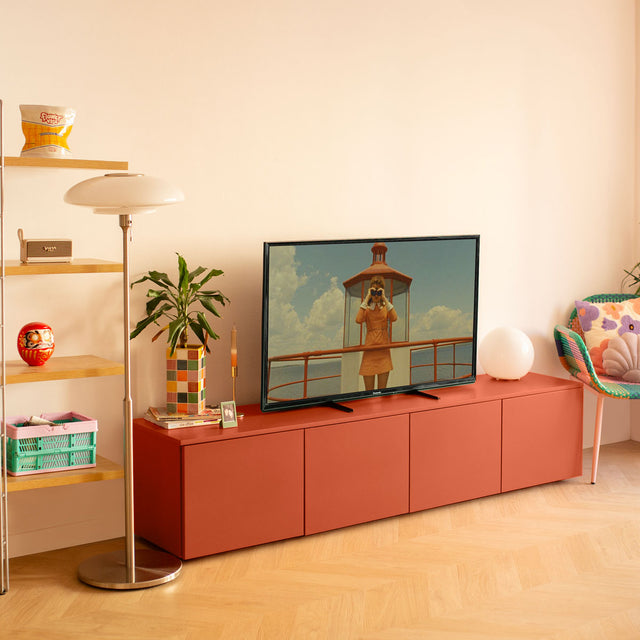
The MDF lacquering system is synonymous with visual perfection. Thanks to its homogeneous surface, free of grain or irregularities, it allows for an impeccable finish in high gloss, satin, or matte, depending on the desired style.
A sideboard lacquered in Nordic white, a kitchen front in soft tones, or a headboard lacquered in sand demonstrate how this material allows you to play with light and color without distractions. Unlike particleboard, which needs coatings to conceal imperfections, lacquered MDF offers a clean, elegant surface ready to become the focal point of the room.
- Completely smooth and homogeneous surface, without visible veins or pores.
- It allows for perfect lacquering in matte, satin or high gloss.
- Great chromatic versatility: it accommodates all colors, from Nordic whites to intense and personalized tones.
💪Resistance
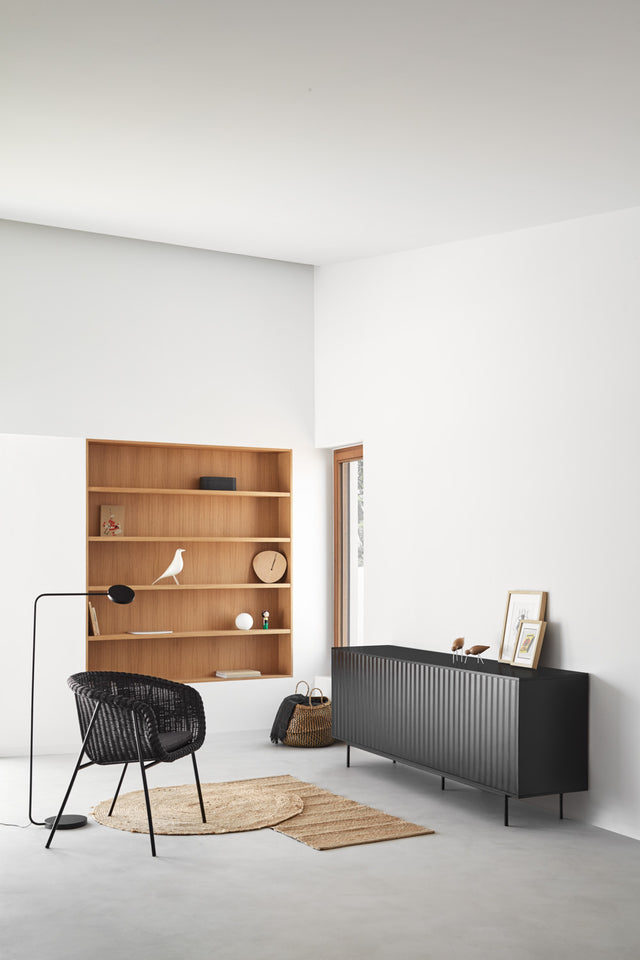
Although not solid wood, lacquered MDF has excellent dimensional stability, meaning it doesn't easily warp in response to changes in temperature or controlled humidity. Its pressed fiber structure makes it much more consistent and reliable than other inexpensive boards.
This makes it the ideal choice for wardrobe fronts, kitchen doors, and everyday lacquered furniture that needs to maintain its shape and appearance over time. The lacquered finish also provides a protective layer that reinforces the surface against minor scratches, making it even more practical in modern homes.
- Good resistance to torsion and moderate impact.
- Superior dimensional stability compared to chipboard: less risk of deformation.
- Indoors, it withstands daily use well on wardrobe fronts, kitchens, and side tables.

🌱Sustainability
MDF is manufactured from recycled wood fibers, often sourced from sawmill waste. This comprehensive utilization process makes it a material with a clear focus on sustainability, especially when it has FSC or PEFC certifications.
The lacquering system extends the lifespan of furniture: simply sand and re-lacquer to make a piece look like new. This reduces waste and promotes a circular economy, creating sustainable, designer furniture that will last for many years.
- Made from recycled wood fibers and sawmill waste.
- With FSC/PEFC certification, it is a material that promotes the circular economy .
- Its durability prolongs the life of the furniture, reducing consumption and waste.
🪑 What furniture or style does it apply to?
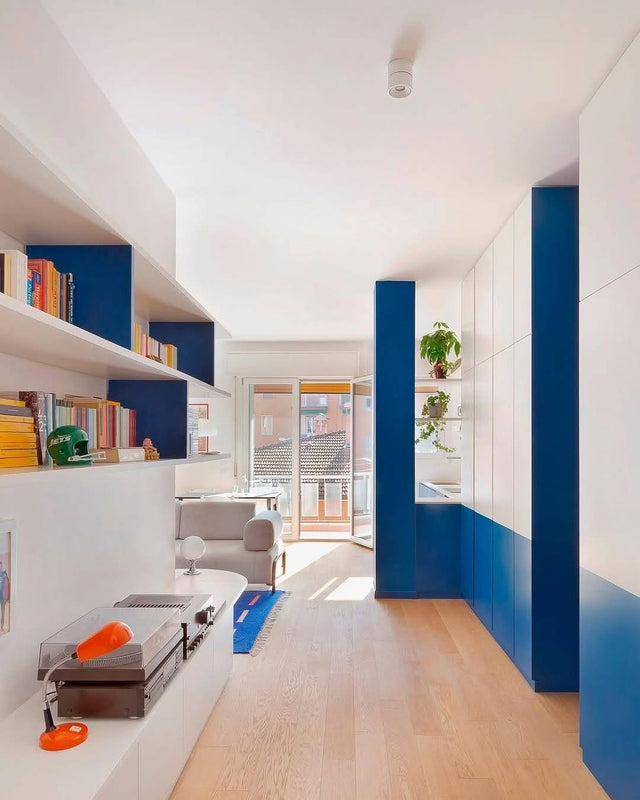
Lacquered MDF is a favorite material in Nordic and minimalist styles, where the purity of surfaces is key. It fits perfectly in designer kitchens, custom-made wardrobe fronts, lacquered sideboards, side tables, and interior paneling.
Furthermore, its chromatic versatility allows for the design of unique furniture, from pure white that reflects light to intense colors that create contrast in bolder environments. Always with a uniform finish that conveys quality, serenity, and modernity.
- Ideal for Nordic and minimalist decor , due to its pure and clean surfaces.
- Perfect for designer lacquered furniture , wardrobe fronts, kitchen doors, interior paneling.
- Widely used in contemporary interior design , where straight lines, uniform color and impeccable finishes are sought.
| Criterio | DM lacado | Aglomerado de virutas |
|---|---|---|
| Estética | Superficie totalmente lisa, ideal para lacados de calidad en mate, satinado o brillo. Color uniforme y profundo. | Superficie más irregular; precisa melamina o chapa para ocultar imperfecciones. |
| Base del material | Fibras de madera finas y densas → porosidad controlada, excelente anclaje del lacado. | Virutas de mayor tamaño → poro y textura heterogénea, peor base para lacar directo. |
| Resistencia / estabilidad | Estable y homogéneo; menor riesgo de alabeos en frentes y paneles anchos. | Menor estabilidad; puede astillarse en cantos y perder tornillo antes. |
| Acabado de cantos y radios | Permite radios suaves y cantos redondeados sin cortes de veta; continuidad visual perfecta al lacar. | El canto necesita canto/chapado; los radios muestran transición de material. |
| Repintado / reparación | Se puede lijar y relacar; alto potencial de mise en beauté con mantenimiento. | Si es melamina, no admite relacado directo; reparación limitada. |
| Resistencia a humedad | Versiones hidrófugas (DM verde) para zonas húmedas; requiere sellado de cantos y buena laca. | Muy sensible al agua; hincha y deslamina si entra humedad. |
| Emisiones y salud | Disponible en E1 / CARB2 (bajas emisiones). Lacados al agua = baja COV. | También E1 en muchas variantes, pero su acabado suele ser melamina con colas convencionales. |
| Mecanizado | Corte y fresado limpios; detalles curvos y molduras precisas sin desgarro. | Buen mecanizado básico, pero los cantos pueden descascarillar. |
| Aplicaciones | Muebles lacados premium, cocinas, armarios, frentes, panelados y puertas interiores de diseño. | Mobiliario económico, interiores ocultos, módulos con melamina. |
| Sostenibilidad | Fibras recicladas y opción FSC/PEFC; larga vida útil gracias al repintado. | Virutas recicladas; vida útil más corta en ambientes exigentes. |
| Mantenimiento / limpieza | Paño suave, jabón neutro; el lacado resiste bien a la limpieza diaria. | Superficies de melamina: limpian bien, pero no reparables si se dañan. |
| Valor percibido | Material premium para lacados de diseño; acabado de “revista”. | Opción básica y económica; percepción más baja. |
| Coste total (acabado) | Mayor coste unitario, pero mejor resultado y durabilidad del lacado. | Menor coste inicial; si se busca apariencia superior, añade chapa/melamina. |
| Resumen | La mejor base para lacar: uniforme, elegante y duradera. | Básico para economía y piezas no vistas. |