
Decorative cushions: how to choose them well and arrange them with taste
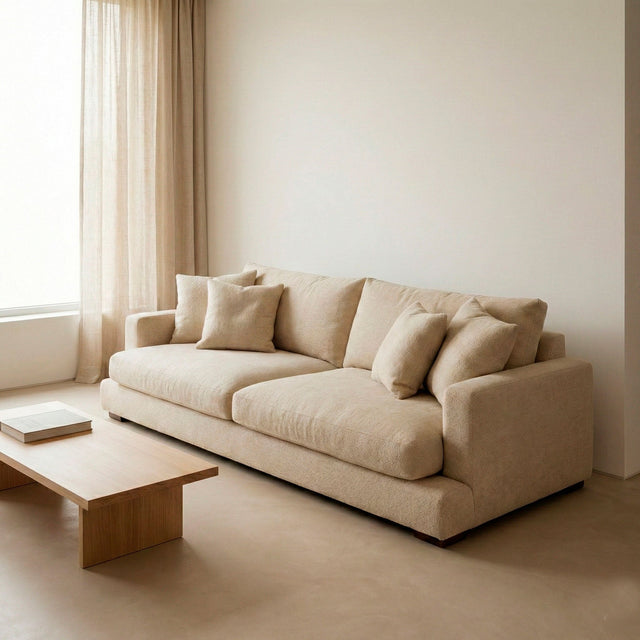
A sofa without cushions is like a room without natural light: it serves its purpose, but it lacks soul. Decorative cushions are probably the textile element with the greatest transformative power in a living room. With a small budget and good decisions, you can completely change the atmosphere of your living area. But be careful: it's not about accumulating cushions haphazardly. It's about choosing thoughtfully, combining intentionally, and arranging with aesthetic sense. Let's see how to do it right.

Why cushions matter more than you think
In Nordic decor, every element has a purpose. Cushions aren't just there to support your back: they add color, texture, tactile warmth, and visual rhythm. They are the quickest way to update a space with seasonal changes or simply when you need a breath of fresh air in your living room.
A sofa with clean lines in a neutral tone—stone gray, off-white, sand—is a perfect canvas. Cushions are the strokes that give it personality. And the best part: you can experiment without risk. If a combination doesn't work, you can change it in five minutes.

Materials that deserve a place on your sofa
Touch is everything. A cushion that isn't pleasant to touch doesn't fulfill its purpose. Therefore, choosing the fabric is the first important decision, even before color or pattern.
Always opt for natural fibers and substantial fabrics. These are the ones that age well, gain character with use, and provide that honest warmth so characteristic of the Nordic style.
- Washed linen: irregular texture, relaxed drape, cool feel. Perfect for year-round use and ages with unique beauty.
- Organic cotton: soft, durable, and easy to maintain. Ideal if you have children or pets.
- Bouclé or woven wool: adds volume and a rich texture that invites snuggling. Great for colder months.
- Cotton velvet: tactile elegance without artificiality. Subtle light reflection elevates any composition.
- Jute or woven cotton: for those seeking a rustic and organic touch, with a strong visual presence.
Avoid low-quality fillings that lose volume within weeks. A good feather or hollow fiber cotton filling maintains its shape and that plush look that makes a cushion irresistible to the touch.
The color palette: how to combine without making mistakes
This is where many people get stuck. The key is not to get bogged down in color theory, but to follow a simple rule that always works: work with a palette of a maximum of three tones.
Choose a base tone that connects with your sofa (it can be the same color in a different texture), a mid-tone that provides subtle contrast, and an accent tone that adds a burst of energy. For example: if your sofa is light gray, you could combine cushions in off-white (base), soft terracotta (mid-tone), and muted mustard (accent).
In the Nordic universe, chromatic harmony is built with natural tones: sage greens, dusty blues, ochres, creams, warm whites, and the entire range of earth tones. These colors coexist without competing and create that visual calm so characteristic of Scandinavian interiors.
A tip interior designers use: if you introduce a pattern—thin stripes, simple geometric motifs, organic shapes—keep the rest of the cushions plain. The ideal proportion is one patterned cushion for every two or three plain ones.
Arrangement: order, proportion, and naturalness
Choosing well is just as important as arranging well. A three-seater sofa doesn't need eight stacked cushions. It needs just enough to create a balanced composition that invites you to sit down, not to move cushions aside.
These are the guidelines that work best depending on the size of your sofa:
- Two-seater sofa: three cushions are enough. Two of the same size at the ends and one slightly smaller or of a different shape in the center.
- Three-seater sofa: between four and five. Start with the largest ones at the ends and gradually decrease the size towards the center. Play with shapes: large squares (50x50 cm) combined with rectangular ones (30x50 cm).
- L-shaped or chaise longue sofa: distribute the cushions in two groups, one at each corner, leaving the central area clear. This maintains functionality and visual order.
A trick that makes all the difference: arrange the cushions slightly angled, not perfectly straight. This gives a natural, lived-in feel, as if someone has just gotten up from the sofa. Geometric perfection feels cold; naturalness, inviting.
Change seasons without changing sofas
One of the most practical advantages of decorative cushions is their ability to adapt your living room to the rhythm of the year. You don't need to redecorate: just rotate covers and textures.
In spring and summer, opt for linens, light cottons, and fresh tones: white, aqua green, pale blue, sand. In autumn and winter, raise the visual temperature with wools, velvets, and enveloping colors: terracotta, curry, forest green, slate gray.
This simple gesture—which takes barely ten minutes—renews the energy of your space and keeps it vibrant, connected to what's happening outside the window.
The final detail that changes everything
Cushions don't work alone. They work best when they interact with other textiles in the living room: a woolen blanket folded over the armrest, a natural fiber rug under the table, linen curtains that filter the light. This conversation between textures is what transforms a decent living room into a space with soul.
If you want to see and feel fabrics before deciding, at our showroom in Valencia (Avda. Pérez Galdós 127) you can try combinations on real sofas and leave with clear ideas. You can also explore our selection of textiles at slowdeco.es, where you'll find cushions in natural fibers, with quality fillings, and in the color palette that defines well-thought-out Nordic interiors. Because dressing a sofa with discernment is, ultimately, a way of caring for your daily life.
0 Comments
There are no comments for this article. Be the first one to leave a message!