
Grandma Chic: How to Mix Vintage and Modern in Your Living Room
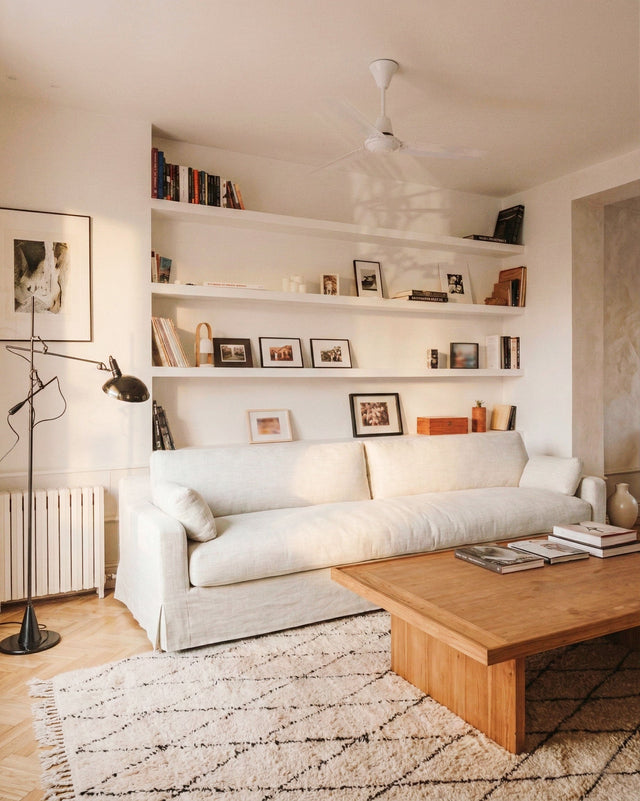
Imagine walking into a living room where a 1960s sideboard inherited from your grandmother coexists with a sleek sofa, and everything just works. That contrast that once seemed risky now has a name: Grandma Chic.
Grandma Chic style involves integrating vintage pieces—inherited furniture, flea market antiques, objects with history—with contemporary design, creating spaces with soul and personality. The key is to balance proportions, adhere to a cohesive palette, and let each piece breathe. It’s not about recreating your grandmother's house, but about honoring the old from a current perspective.
What exactly is Grandma Chic style and why does it work now?
Grandma Chic emerges as a response to the cold minimalism that dominated the last decade. According to Pinterest data, searches for "reinterpreted vintage decor" grew by 78% in 2023. This style embraces imperfection, the patina of time, and the emotional value of objects, combining them with modern pieces that bring freshness and functionality.
Think of faded velvets next to light oak woods, a restored chandelier above a Nordic dining table, hand-embroidered cushions on a contemporary modular sofa. The result is a space that appears to have evolved over time, not decorated overnight. At the Slowdeco showroom in Valencia (Avda. Pérez Galdós 127), we help clients find that balance between the inherited and the new, selecting contemporary pieces that dialogue with any family antique.
The 3 golden rules for mixing old and modern furniture
Successfully mixing eras requires method, not blind intuition. These three rules, applied by professional interior designers, guarantee visual coherence: maintain a 70-30 proportion between modern and vintage pieces, stick to a maximum palette of 3-4 colors, and vary heights to create visual rhythm.

The 70-30 Rule: the perfect balance
The ideal proportion places 70% contemporary furniture as a neutral base, allowing the 30% vintage pieces to shine as protagonists. A clean-lined sofa like those from Slowdeco's Somi collection, for example, creates the perfect canvas for an Art Deco side table or an inherited gold-framed mirror to stand out. If you reverse the proportion, the space can feel cluttered or dated.
The cohesive palette: your common thread
Select 3-4 tones that connect all the pieces. Warm neutrals—cream, sand, taupe—work especially well because they appear in both current Nordic furniture and waxed wooden antiques. Add an accent color (terracotta, sage green, mustard) that you can repeat in textiles from both eras.
Vary heights and volumes
Alternate low and light pieces (typical of Scandinavian design) with more robust and vertical furniture (tall sideboards, display cabinets, floor lamps with shades). This variation prevents monotony and creates natural focal points.
Which vintage pieces work best (and which to avoid)
Not all old items combine equally well with current design. Solid wood pieces with organic shapes (1950s-70s) integrate effortlessly; highly ornate furniture in Elizabethan or Louis XV style requires a very neutral context to avoid overwhelming the space.
- Ideal for mixing: Danish teak sideboards, bentwood chairs, mirrors with simple frames, brass or ceramic lamps, muted Persian rugs, fine porcelain cutlery and dinnerware.
- Require more care: heavily carved furniture, upholstery with large patterns, very shiny metal pieces, complete sets (avoid putting out the entire inherited dining set; select only the chairs or only the table).
- Best to avoid: structurally unsound furniture, pieces with persistent damp smells, styles that don't excite you (emotional connection is key in this style).
At slowdeco.es, you'll find contemporary furniture with timeless lines—like the Penxat modular shelves or the Teulat collection tables—designed to coexist with any antique you want to integrate.
How to get started: a 4-step plan
Transforming your living room into Grandma Chic doesn't require a complete renovation. With an average investment of €800-2,000 in 2-3 key pieces, you can achieve the change. This step-by-step plan guides you from inventory to final placement.
- Emotional inventory: Gather the inherited or vintage pieces that truly matter to you. Be selective; 2-3 objects with history are worth more than ten without an emotional connection.
- Define your neutral base: Choose the sofa, rug, or main shelving in contemporary tones and shapes that act as a backdrop.
- Integrate with intention: Place vintage pieces in focal points (living room entrance, next to a window, on a low cabinet) so the eye naturally finds them.
- Connect with textiles: Cushions, blankets, and curtains can repeat colors present in both old and new items, unifying the ensemble.

In summary
- Grandma Chic mixes 70% contemporary furniture with 30% vintage pieces to create spaces with personality without losing coherence.
- A reduced palette of 3-4 warm neutral colors is the common thread that unites different eras.
- Solid wood pieces from the 1950s-70s integrate best with current Nordic design.
- At Slowdeco, a Nordic furniture store in Valencia and online, you'll find contemporary bases ideal for combining with your favorite antiques.
Frequently asked questions
Can I mix several different vintage styles in the same living room?
Yes, as long as you maintain a unifying element: color, material, or finish. For example, a 1900 Thonet chair and a 1965 Danish sideboard can coexist well if both have honey-toned wood and share space with textiles in the same color range. Limit styles to a maximum of 2-3 eras to avoid a cluttered effect.
How do I know if an inherited piece is worth restoring or if it's better to let it go?
Evaluate three factors: structure (is it solid or does it have irreparable damage?), emotional value (does it tell a story you want to preserve?), and versatility (does it fit into your current life?). A basic varnish and upholstery restoration costs between €150-400 in workshops in Valencia. If the piece meets all three criteria, it's worth the investment.
Does Grandma Chic style work in small spaces?
Especially well. In living rooms under 20 m², a single powerful vintage piece (an antique mirror, an upholstered armchair) adds character without overwhelming. Combine it with modern furniture with light lines and tall legs that allow the floor to show, visually expanding the space.
0 Comments
There are no comments for this article. Be the first one to leave a message!