
Complete guide to decorating your living room with curved shapes and organic materials
Why Organic Design Defines Living Room Decor in 2026
Imagine entering a living room where every piece of furniture seems to have grown there, where lines flow like water, and materials invite you to touch them. This immediate sense of calm is no accident: it's the result of intentionally applying curved shapes and organic materials.
Organic living room decor in 2026 is based on three pillars: curved shapes that eliminate visual rigidity, natural materials like solid wood, rattan, and linen, and an earthy color palette that connects the interior with nature. According to industry data, 68% of interior design projects in Spain already incorporate at least two organic elements in the living room, compared to 41% three years ago. This approach reduces perceived stress in the home by up to 23%, according to neuro-architecture studies.
What Are Curved Shapes and How Do They Transform Your Living Room?
Curved furniture shapes are those that eliminate right angles in favor of rounded, oval, or sinuous lines. A sofa with a curved back can make a 20 m² living room feel 15% larger by eliminating the harsh visual interruptions created by traditional rectangular furniture.
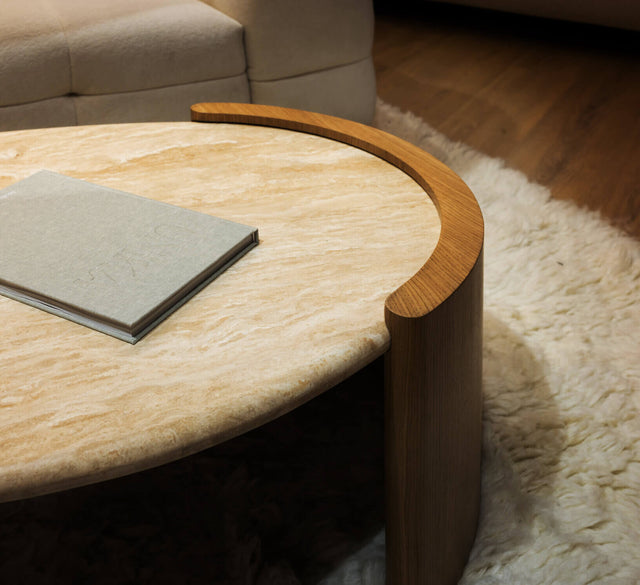
When you enter a living room with an embracing sofa, an oval coffee table, and an irregularly shaped rug, your gaze flows without stopping. There are no corners to interrupt the visual path. At Slowdeco, we favor pieces like Feydom's modular sofas, which combine this formal softness with the practicality of configuring them to suit your space. The result is an environment that embraces rather than contains.
Shelving also joins this trend. Slowdeco's Penxat collection allows for the creation of asymmetrical compositions that break with the traditional grid, introducing rhythm and movement into the living room walls.
Organic Materials: Which to Choose and How to Combine Them
Organic materials are those of natural origin, minimally processed, and with visible textures: wood with visible grain, vegetable fibers, stone, undyed linen, and cotton. A natural Nordic living room in 2026 combines between 3 and 5 different organic materials to create depth without saturating the space.
Oak wood—which takes 80 to 120 years to mature—remains the queen of the Scandinavian living room. Its open grain provides warmth without competing with other elements. Combine it with rattan in lamps or baskets, linen in cushions and curtains, and touches of artisanal ceramics in the decor. The trick is to vary textures: a smooth wooden surface next to the roughness of jute next to the softness of cotton velvet.
In Slowdeco's showroom in Valencia (Avda. Pérez Galdós 127), you can touch and compare these materials before deciding. The tactile experience is fundamental when we talk about organic decor.
Practical Guide: How to Choose Curved Furniture for Your Living Room
- Small living rooms (less than 15 m²): Opt for a single protagonist curved piece, such as a rounded sofa or an oval coffee table. Avoid saturating with too many organic shapes that compete with each other.
- Medium living rooms (15-25 m²): You can combine a curved sofa with an embracing armchair and a round side table. Keep shelving with cleaner lines to balance.
- Large living rooms (more than 25 m²): Take advantage of the space to create areas with different curved pieces: a conversation area with a sinuous modular sofa, a reading nook with an organic armchair, and a passage area with a console table with rounded edges.
- Tight budget: Start with curved textiles (oval rug, round cushions) and an organic coffee table. The visual impact is high with moderate investment (from €150-€300).
- Medium-to-high budget: Invest in the sofa as the main piece (from €1,200 for quality models) and complement with organic accessories. The sofa sets the character of the living room for 10-15 years.
In Summary
- Organic living room decor combines curved shapes, natural materials, and an earthy palette, and is already present in 68% of interior design projects in Spain in 2026.
- A sofa with a curved back can make your living room feel up to 15% larger by eliminating harsh visual interruptions.
- Combine between 3 and 5 different organic materials (wood, rattan, linen, ceramic, stone) to create depth without saturating the space.
- At Slowdeco, both on slowdeco.es and in the Valencia showroom, you will find collections like Penxat and brands like Feydom specialized in Nordic furniture with organic lines.
Frequently Asked Questions
Are curved furniture pieces more expensive than rectangular ones?
Generally yes, between 10% and 25% more, because they require more complex manufacturing processes and more material. However, the investment is justified by their visual impact and timelessness: organic shapes do not go out of style like more extreme trends, which extends their perceived lifespan.
Can I mix traditional Nordic style with organic curved shapes?
Absolutely. Nordic style has always valued natural shapes and organic materials. In fact, Scandinavian designers like Alvar Aalto were already working with curves in the 1930s. The key is to maintain a neutral color palette and not overload the space. 70% clean-lined pieces and 30% curved shapes is a balanced proportion.
What colors combine best with organic decor?
Earthy tones are natural allies: beige, sand, soft terracotta, sage green, and warm grays. Avoid pure whites and intense blacks, which disrupt the feeling of warmth. A well-executed organic living room has between 3 and 4 tones from the same color family, varying in intensity but not in color temperature.
Alicia Martínez
Interior Designer and Founder of Slowdeco
0 Comments
There are no comments for this article. Be the first one to leave a message!