
The Perfect Armchair: How to Choose One for Your Favorite Spot
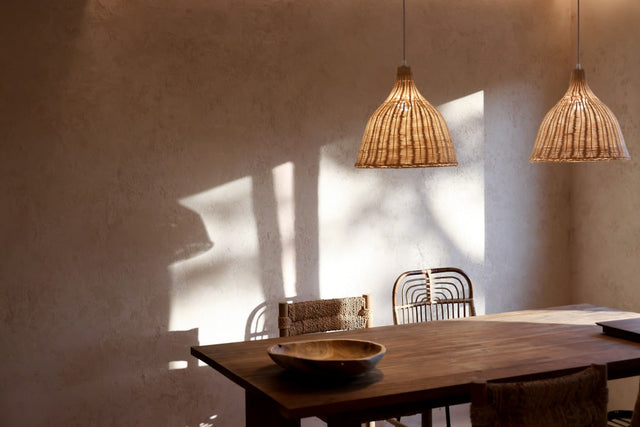
That corner waiting for you

Imagine coming home after a long day, sinking into your armchair by the window, and feeling the afternoon light filter through the curtains as you hold a book or simply do nothing. That moment of pause exists; it just needs the right seat.
The perfect armchair for your reading or relaxation nook must balance three factors: dimensions proportional to your space (minimum 70 cm wide for real comfort), a seat height between 40-45 cm that allows you to get up effortlessly, and materials that age well, such as solid wood or high-density upholstery. In Nordic style, we also look for clean lines and natural tones that add warmth without cluttering the environment.
What measurements does your armchair need according to the available space?
A standard armchair occupies between 0.5 and 0.8 m² of usable surface, but you also need to calculate the usage space: about 50 cm in front for stretching your legs and 30 cm on the sides for comfortable access. In living rooms smaller than 15 m², a compact armchair 65-70 cm wide integrates better than an 85 cm model.
The trick interior designers in Valencia use when visiting the Slowdeco showroom is simple: they measure the exact corner with masking tape on the floor before choosing. This way, they visualize whether the armchair will breathe or overwhelm the space. Nordic armchairs usually have medium-height backrests (between 75 and 90 cm), which makes them perfect for spaces where you don't want to block the view of the living room. If your ceiling is less than 2.50 m, avoid high wingback chairs that visually compress the room.
Wood, upholstery, or both: materials that define character

A solid wood frame—oak, ash, or beech—guarantees an average durability of 25-30 years compared to 8-12 years for particleboard. In Nordic armchairs, the wood is usually visible on legs and armrests, providing that Scandinavian warmth that defines the style.
The upholstery deserves as much attention as the frame. A foam density of 30-35 kg/m³ maintains its firmness for years without deforming in the seating area. High-traffic fabrics (over 25,000 Martindale cycles) resist daily use without showing premature wear. At Slowdeco, you'll find options like Feydom or Tapidiseny armchairs, where the combination of natural wood frames and technical upholstery with a warm look achieves that balance between practical and aesthetic that you're looking for.
For a reading nook, consider upholstery in neutral tones—warm grays, beiges, off-whites—that don't compete with natural light. If the armchair is to be the accent color in the living room, forest greens or terracotta work especially well in Nordic-style environments.
How to choose according to use: reading, relaxing, or decorative
Not all armchairs are suitable for the same purpose. A reading armchair needs a backrest angle between 100° and 110° to maintain posture without straining the neck, while a relaxation armchair can recline up to 120°. Purely decorative armchairs prioritize silhouette over ergonomics.
- For daily reading: Look for armrests at elbow height when seated (about 20-22 cm from the seat), a backrest that supports the lumbar area, and, if possible, a matching footrest. Ideal seat depth: 50-55 cm.
- For occasional relaxation: Prioritize cushioning comfort over firmness. Armchairs with feather or hollow fiber cushions offer that enveloping feel perfect for a Sunday nap.
- To complete a minimalist living room: Armchairs with architectural lines and exposed frames function as sculptural pieces. Less padding, more visual presence.
- For small spaces: Models without armrests or with open arms that allow a view of the floor and create a sense of spaciousness.
In summary
- Measure your actual space: an armchair needs between 0.5 and 0.8 m² plus 50 cm of frontal use; calculate before falling in love with a model.
- Solid wood frame (oak, ash, beech) lasts 25-30 years compared to 8-12 years for particleboard; the investment pays off in the long run.
- For reading, look for a backrest between 100°-110° and armrests 20-22 cm from the seat; for relaxing, you can go up to 120° recline.
- Upholstery with a minimum density of 30 kg/m³ and resistance greater than 25,000 Martindale cycles maintains its shape for years.
- At slowdeco.es and in the Valencia showroom, you'll find Nordic armchairs from brands like Feydom and Tapidiseny that combine natural wood with technical upholstery for a warm look.
Frequently asked questions
What seat height is most comfortable for a reading armchair?
The optimal height is between 40 and 45 cm from the floor, similar to that of a standard sofa. This measurement allows most people (between 1.60 m and 1.85 m tall) to rest their feet flat on the floor without their knees being too elevated. If you are shorter than 1.60 m, look for seats 38-40 cm high or add a footrest.
Armchair with or without armrests for a small living room?
In living rooms smaller than 12 m², armchairs without armrests or with open, low arms visually expand the space by allowing more floor surface to be seen. You gain between 10 and 15 cm of visual width. If you need armrests for comfort, choose models with a thin, exposed wooden frame instead of bulky upholstered arms.
How much should I invest in a quality armchair?
An armchair with a solid wood frame and medium-high quality upholstery ranges between €400 and €900 in the Spanish market. Below €300, it's difficult to find real wood and adequate foam density. Consider that a €600 piece that lasts 25 years costs €24 per year of use, while a €200 piece that deforms in 5 years costs €40 annually.
Alicia Martínez
Interior Designer and Founder of Slowdeco
0 Comments
There are no comments for this article. Be the first one to leave a message!