

Types of shelving: Trends for your spaces
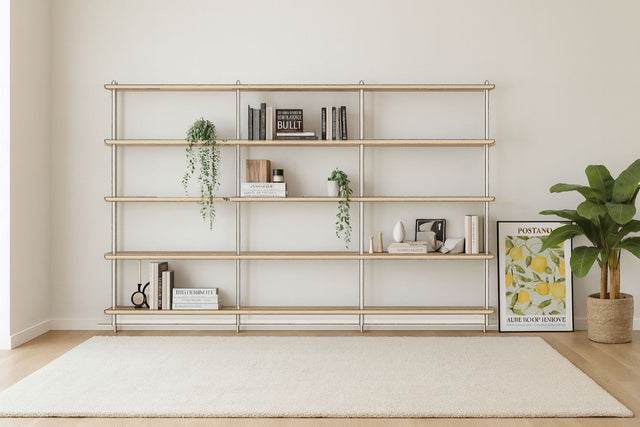
Choosing the right shelving for your home can completely transform both the functionality and aesthetics of your spaces. Bookshelves , wall-mounted bookcases , modular shelving , and other vertical storage systems are not simply utilitarian items; they are fundamental pieces that define the personality and organization of each room.
In today's interior design world, wooden shelves , metal racks , and modern bookcases have evolved into decorative elements that combine practical functionality with aesthetic expression. From minimalist floating shelves to built-in libraries that occupy entire walls, each type of shelving offers specific solutions for different needs and lifestyles.
As a furniture specialist, I've observed how the right choice of bookshelves and storage systems can optimize small spaces, create stunning focal points in large rooms, and provide organizational solutions that truly transform the way you live in your home. Throughout this comprehensive guide, we'll explore all the types of shelving available to help you find the perfect solution for your unique space.
1. Wall shelves: Maximizing vertical space
Floating shelves: Minimalist elegance
Floating shelves represent the most refined evolution of wall storage. These shelves are characterized by their concealed mounting system, which creates the illusion that the shelves "float" on the wall without visible supports. They are ideal for modern spaces where you seek a clean and minimalist aesthetic.
The best floating shelves are made of solid wood or high-density composite materials that guarantee strength without compromising visual elegance. They are available in various thicknesses, from thin 2-3 cm shelves for lightweight decorative items to sturdy 5-8 cm shelves capable of supporting heavy books or electronic equipment.
Installing floating shelves requires technical precision, as the fixing system must be perfectly aligned to achieve the desired visual effect. When properly installed, these shelves can support between 15 and 30 kg per linear meter, depending on the material and fixing system used.
Shelving with visible supports: Functionality and character
Wall shelves with visible brackets offer greater load capacity and allow for more flexible installation. The brackets themselves can become decorative elements, especially when you choose designs in wrought iron, industrial steel, or carved wood that complement the style of your space.
This type of shelving is especially suitable for wall-mounted bookcases that need to support extensive book collections. The brackets distribute the weight more efficiently, allowing each shelf to support up to 40-50 kg when properly installed on solid walls.
Adjustable rail and support systems
Shelving systems with vertical rails and adjustable brackets offer maximum flexibility in wall storage. These modular shelves allow you to modify the height and configuration according to your changing needs, making them especially useful for bookshelves where you need to accommodate books of varying sizes.
The main advantage of these systems is their adaptability. You can start with a basic configuration and expand both horizontally and vertically as your storage needs evolve. Many professional systems allow loads of up to 60 kg per shelf when using the appropriate brackets and fixings.
2. Independent shelving units: Versatility and mobility
Traditional vertical bookcases
Freestanding vertical bookcases remain a popular choice for their versatility and storage capacity. These traditional wooden shelving units offer multiple shelves in a self-supporting structure that doesn't require wall mounting, making them ideal for rental spaces or situations where you prefer to maintain the flexibility to relocate.
The best vertical bookcases combine structural stability with attractive design. Look for models with solid backs that provide extra rigidity and prevent books from sliding backward. The ideal depth for bookshelves is between 25-30 cm, enough to accommodate most book formats without wasting space.
Modular shelving: Infinite customization
Modular shelving represents the modern evolution of traditional shelving . These systems allow you to create fully customized configurations by combining individual modules according to your specific needs. You can start with a basic module and expand horizontally or vertically as your space and collection grow.
The beauty of modular shelving lies in its adaptability. A well-designed system can transform from a simple entryway shelf into a complete wall-to-wall library . Look for systems that use robust connectors and allow for both symmetrical and asymmetrical configurations for maximum creative flexibility.
Book towers: Compact solutions
For small spaces, tower shelving units offer maximum storage in a minimal footprint. These tall, narrow bookcases take advantage of the height of your rooms to create efficient vertical storage without taking up much floor space.
The best shelving units include anti-tip systems and wide bases that ensure stability even when fully loaded. Consider models with varying shelf widths to accommodate both books and decorative items, creating visually interesting displays.

3. Shelving according to materials: Style and durability
Wooden shelves: Warmth and tradition
Wooden shelving remains the most popular choice for bookcases and home storage systems. Natural wood brings warmth, texture, and a sense of permanence that other materials can hardly match. Oak, cherry, walnut, pine, and beech are the most commonly used species, each with its own specific characteristics of color, grain, and durability.
Solid wood bookshelves represent the highest quality and durability. Although they require a larger initial investment, these bookcases can last for generations with proper care. Solid wood also allows for repairs and restorations that keep the piece functional and beautiful for decades.
For tighter budgets, shelving made from coated particleboard or quality plywood offers the look of natural wood with greater resistance to moisture and temperature variations. Modern laminate finishes can faithfully reproduce the textures and colors of premium woods.
Metal shelving: Industrial strength
Metal shelving has evolved from purely industrial applications to become a popular design element in modern homes. Steel, aluminum, and wrought iron offer exceptional strength and distinctive aesthetics, ranging from contemporary minimalism to vintage industrial charm.
Painted or galvanized steel shelving is especially suitable for garages, basements , or workspaces where functionality takes precedence over aesthetics. However, modern metal shelving designs with colorful powder-coated finishes can be beautifully integrated into contemporary living rooms and bedrooms.
Wrought iron allows for the creation of bookshelves with a unique artistic personality. Each piece can include custom decorative elements, transforming the bookcase into a functional work of art. While they require a larger investment, these handcrafted shelves become family heirlooms passed down through generations.
Material combinations: The best of both worlds
Shelving units that combine different materials are gaining popularity for their aesthetic and functional versatility. Metal structures with wooden shelves , for example, combine the strength of steel with the warmth of natural wood.
These combinations allow you to adapt the shelving unit to different decorating styles. A black iron frame with natural oak shelves can work in both an industrial loft and a country house, simply by changing the surrounding decorative elements.
4. Specialized shelving: Specific solutions
Kitchen shelving: Culinary functionality
Kitchen shelving requires special consideration due to exposure to moisture, heat, and grease. Stainless steel shelves are ideal for areas near stoves and sinks, while treated wood shelving can work well in pantry or dining areas.
Floating shelves in kitchens should be made of moisture-resistant materials and be easy to clean. Consider shelves with raised edges to prevent items from rolling and falling, which is especially important for spices and small utensils.
Bathroom shelves: Moisture resistant
Bathroom shelves face unique challenges due to constant humidity and temperature variations. Shelving made of tempered glass, stainless steel, or water-resistant composite materials are the best options for these spaces.
Floating glass shelves are especially popular in modern bathrooms because they don't absorb moisture and are easy to clean. For bathrooms with a more traditional aesthetic, shelves made of treated wood with marine finishes can provide warmth while resisting humidity.
Office shelving: Professional organization
Office shelving should balance functionality, durability, and professional aesthetics. Modular shelving is especially useful because it allows storage to be adapted as document and equipment needs change.
Consider shelving units that combine open and closed shelves to balance visible and hidden storage. Closed shelves are ideal for confidential documents or equipment you'd prefer to keep out of sight, while open shelves can display reference books and decorative items.
5. Shelving according to space: Perfect adaptation
Living room shelves: The heart of the home
The living room is where bookshelves can have the greatest visual and functional impact. Large bookcases can become architectural elements that define spaces and create inviting atmospheres. Consider shelves that combine book storage with space for decorative displays, plants, and personal items.
Living room shelves should blend harmoniously with the rest of the furniture. If you have light wood furniture, shelves in similar tones will create visual continuity. For dramatic contrast, shelves in contrasting colors or materials can become stunning focal points.
Bedroom shelving: Intimate functionality
In bedrooms, shelving should balance functionality with creating a relaxing atmosphere. Floating shelves around the headboard can provide storage for bedside books, while low bookcases can double as alternative nightstands.
For small bedrooms, consider vertical corner shelves that maximize storage without obstructing movement. Shelves with integrated lighting can create cozy atmospheres for reading at night.
Shelving for small spaces: Smart maximization
Small spaces require specially designed shelving to maximize storage without visually overwhelming the room. Floating corner shelves make use of otherwise wasted space.
Tall, narrow shelves can create the illusion of higher ceilings while providing ample storage. Use shelves in light or transparent colors to maintain a sense of spaciousness.
6. Installation and safety: Technical considerations
Wall types and fixing systems
Proper installation of wall shelves requires considering the type of wall and choosing the appropriate fixing systems. Brick, concrete, drywall, and wood walls require different types of anchors and installation techniques.
For heavy shelving or extensive bookcases , always locate the wall studs to ensure secure fixings. Use stud finders and precision levels to guarantee perfectly aligned and safe installations.
Weight distribution and load capacity
Each type of shelving has specific weight limits that you must respect to ensure safety and durability. Distribute the weight evenly across each shelf and avoid concentrating heavy objects at the ends where the structure is more vulnerable.
For heavy bookshelves , consider additional bracing or load distribution systems that transfer the weight to multiple points in the wall structure.
Anti-tip systems for tall shelving
Tall , freestanding bookshelves require anti-tip systems, especially in homes with children. Many modern bookcases include wall-mounting kits that prevent accidental tipping without compromising aesthetics.

7. Style and decoration: Integrating shelving into your design
Shelves as decorative elements
Modern bookshelves transcend their utilitarian function to become central decorative elements. A well -designed bookcase can serve as a backdrop for an art collection, create symmetry in formal rooms, or add visual texture to flat walls.
Consider the styling of your shelves as an integral part of your interior design. Alternate vertical and horizontal books, incorporate decorative objects of varying heights and textures, and leave some shelves partially empty to create visual breathing room.
Lighting for shelves
The right lighting can transform functional shelving into dramatic architectural features. LED strips concealed at the bottom of each shelf create soft ambient lighting, while directional spotlights can highlight specific objects or reading areas.
For large bookshelves , consider zoned lighting systems that allow you to illuminate only the areas you are using, creating intimate environments and saving energy.
Color and finishes: Visual harmony
The color of your shelving should be thoughtfully integrated with the overall color palette of the room. White or light-colored shelves can make small spaces appear larger, while dark-toned shelves can add drama and sophistication to large rooms.
Matte finishes minimize reflections and create softer appearances, while glossy finishes can add glamour and reflect light to brighten dark spaces.
8. Maintenance and care: Preserving your investment
Regular cleaning and protection
Proper maintenance of your shelving will ensure it retains its beauty and functionality for years to come. Wooden shelves require specific products that nourish the wood without damaging the finish, while metal shelves may need protection against corrosion in humid environments.
Establish regular cleaning routines that include both the shelving unit and the stored items. This prevents dust buildup and allows for early detection of any structural problems.
Periodic reorganization
Periodically rearrange your shelves to redistribute the weight and prevent warping. This is especially important for wooden shelves , which can bend under constant loads. Rotate the position of heavy books and regularly check that the fastenings remain secure.
9. Current trends: The future of shelving
Sustainability and eco-friendly materials
Sustainability is transforming the world of shelving . Recycled materials, FSC-certified wood, and eco-friendly manufacturing processes are gaining popularity among environmentally conscious consumers.
Modular shelving also represents a more sustainable option because it can be adapted and expanded rather than completely replaced when needs change.
Integrated technology
Bookshelves of the future will increasingly integrate technology. Built-in wireless charging, smart lighting controlled by apps, and even digital book cataloging systems are beginning to appear in premium designs .
Customization and tailor-made manufacturing
The trend towards personalization means that more and more people are choosing shelving specifically made for their spaces and needs. This approach ensures perfect space optimization and seamless integration with the existing design.
The perfect bookshelf for your life
Choosing the right shelving for your home is a decision that will impact both the functionality and aesthetics of your spaces for years to come. As you've discovered in this comprehensive guide, there's no one-size-fits-all solution; the perfect shelving unit is the one that specifically suits your space, lifestyle, and storage needs.
Whether you opt for minimalist floating shelves , traditional solid wood bookcases , adaptable modular shelves , or hybrid systems that combine multiple materials and functionalities, the important thing is that your choice reflects both your practical needs and your aesthetic vision.
The best bookshelves don't just organize your belongings; they transform spaces, create inviting atmospheres, and become frames for showcasing your personality and interests. They are investments in your home's functionality that, when chosen correctly, provide value and satisfaction for decades.
Remember that the perfect bookshelf is one that grows with you, adapting to your changing needs and evolving with your personal style. Take the time to carefully assess your space, consider your current and future needs, and choose systems that offer the flexibility your life requires. Your home—and your books—will thank you.
0 Comments
There are no comments for this article. Be the first one to leave a message!